 EN

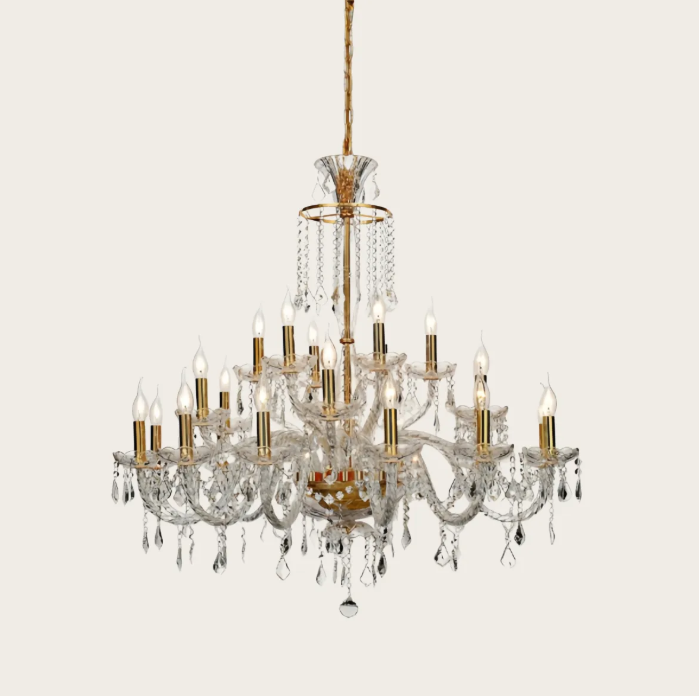
Certification and Electrical Compliance Are the First Filter
When sourcing artistic lamps for commercial projects, the first question is not how the fixture looks in a showroom. It is whether the fixture can be installed legally and safely in the intended location. Commercial work brings listed requirements that residential decorative lighting often sidesteps: UL 1598 in North America, IEC 60598 in many export markets, and local amendments that can be stricter than either. A decorative pendant, a sculptural floor lamp, or a custom chandelier still needs a listed driver, proper strain relief, correct wire insulation, and a label that matches the installation environment. Damp and wet location ratings matter for covered entries, atriums with condensation risk, and outdoor terraces. Emergency lighting and controls compatibility may also apply. A supplier that treats certification as paperwork is a risk. Ask for the listing file, the tested assembly, and the driver specification before approving a sample. Artistic intent does not override electrical code.
Light Quality Has to Be Measured, Not Eyeballed
Artistic lamps are often judged by appearance, but commercial spaces need measurable light quality. Two fixtures can look identical in a photo and behave very differently on a dimmer. The useful checks are color rendering, color consistency, flicker, and dimming range. CRI Ra 90 is a common floor for color critical areas, yet CRI alone hides weaknesses in red rendering. ANSI/IES TM-30-20 gives Rf and Rg values that show whether skin tones, wood, and branded materials stay believable. CCT tolerance across a batch matters when a lobby has twenty pendants in one sightline. Flicker percent and flicker index matter for camera zones and for occupants who are sensitive to modulation. Dimming compatibility is its own trap. A fixture that dims smoothly on a wall box may misbehave on a centralized DMX or DALI system. Request photometric files, TM-30 reports, and a dimming demo with the specified control gear, not a generic dimmer.
Thermal Design and Driver Placement Decide Real Service Life
Decorative shapes are good at trapping heat. A closed glass globe, a fabric shade, or a sculptural metal body can push LED junction temperatures higher than the label suggests. Driver placement makes it worse. Drivers buried inside a decorative enclosure may have a shorter life than drivers mounted in a remote, ventilated location. For commercial sourcing, ask where the driver sits, what ambient temperature the fixture is rated for, and whether the driver can be replaced without dismantling the decorative body. A fixture rated for 25 C ambient may be fine in a residential dining room and marginal in a warm atrium. This is also where suppliers separate themselves. Good manufacturers design the thermal path and document it. Weak ones copy a shape and hope the lamp lasts.
Maintenance, Spares, and Access Are Cost Drivers
Commercial projects live longer than a single installation crew. The maintenance team needs to clean the fixture, replace failed modules, and match finishes years later. Artistic lamps often have custom canopies, hand finished surfaces, and nonstandard glass. Those details make spares essential. Sourcing should confirm: 1. whether the LED module and driver are field replaceable, 2. whether spare parts can be ordered as separate line items, and 3. whether the mounting hardware allows service without removing adjacent ceiling panels. In a hotel lobby renovation in a humid Gulf Coast city, decorative pendants were selected on appearance, but the drivers were sealed inside custom canopies. When dimming problems appeared during commissioning, servicing the drivers required removing canopy assemblies above a finished ceiling. The fix was possible, yet the access penalty changed the maintenance plan. That kind of cost never shows up in a fixture price.
| Sourcing check | Reference point | Why it matters | Common miss |
|---|---|---|---|
| Certification | UL 1598 or IEC 60598 listing | Legal installation and safety review | Decorative fixture with unlisted driver |
| Color quality | CRI Ra 90 and TM-30 Rf/Rg report | Material and brand colors stay credible | Only CRI quoted, no R9 or TM-30 |
| Dimming | Test with specified protocol and driver | Avoid flicker, drop-out, color shift | Demo on a generic dimmer |
| Serviceability | Field replaceable module and driver | Lower long term maintenance disruption | Sealed decorative body |
| Spares | Separate orderable parts | Future matching and repair | Custom finish with no spare stock |
Installation Interfaces and Structural Coordination Need Shop Drawings
Artistic lamps are often selected before the ceiling grid, structural framing, and power locations are finalized. That sequence creates coordination risk. A sculptural pendant may weigh more than a standard luminaire, require a specific anchor pattern, or need a power feed in a location the ceiling plan does not provide. Commercial sourcing should include shop drawings with weight, center of gravity, mounting template, and clearance dimensions. Seismic restraint may apply in some jurisdictions. Outdoor and atrium installations may need wind or sway analysis. Mockups help. A full scale mockup on site reveals whether the fixture hangs at the right height, whether the canopy covers the junction box, and whether the light distribution matches the render. Skipping the mockup saves a little time early and creates expensive field decisions later.
Supplier Capability and Supply Chain Discipline Carry the Whole Project
The final sourcing decision is about the supplier behind the fixture. Artistic lighting is a mix of craft and manufacturing discipline. A supplier that can hold a finish formula, keep a batch of glass consistent, and document driver changes is worth more than a catalog with beautiful photos. Ask how custom finishes are matched, how changes are recorded, and how replacement orders are traced to the original batch. For commercial projects with phased openings, those controls prevent visible mismatch between floors or wings. Andiwilson's manufacturing and quality control approach treats decorative lighting as a production discipline, with finish development, driver sourcing, and assembly checks kept within a coordinated supply chain. That is not the most glamorous part of sourcing artistic lamps, yet it is the part that decides whether the installation still looks intentional after the opening event.
Table of Contents
- Certification and Electrical Compliance Are the First Filter
- Light Quality Has to Be Measured, Not Eyeballed
- Thermal Design and Driver Placement Decide Real Service Life
- Maintenance, Spares, and Access Are Cost Drivers
- Installation Interfaces and Structural Coordination Need Shop Drawings
- Supplier Capability and Supply Chain Discipline Carry the Whole Project