 EN

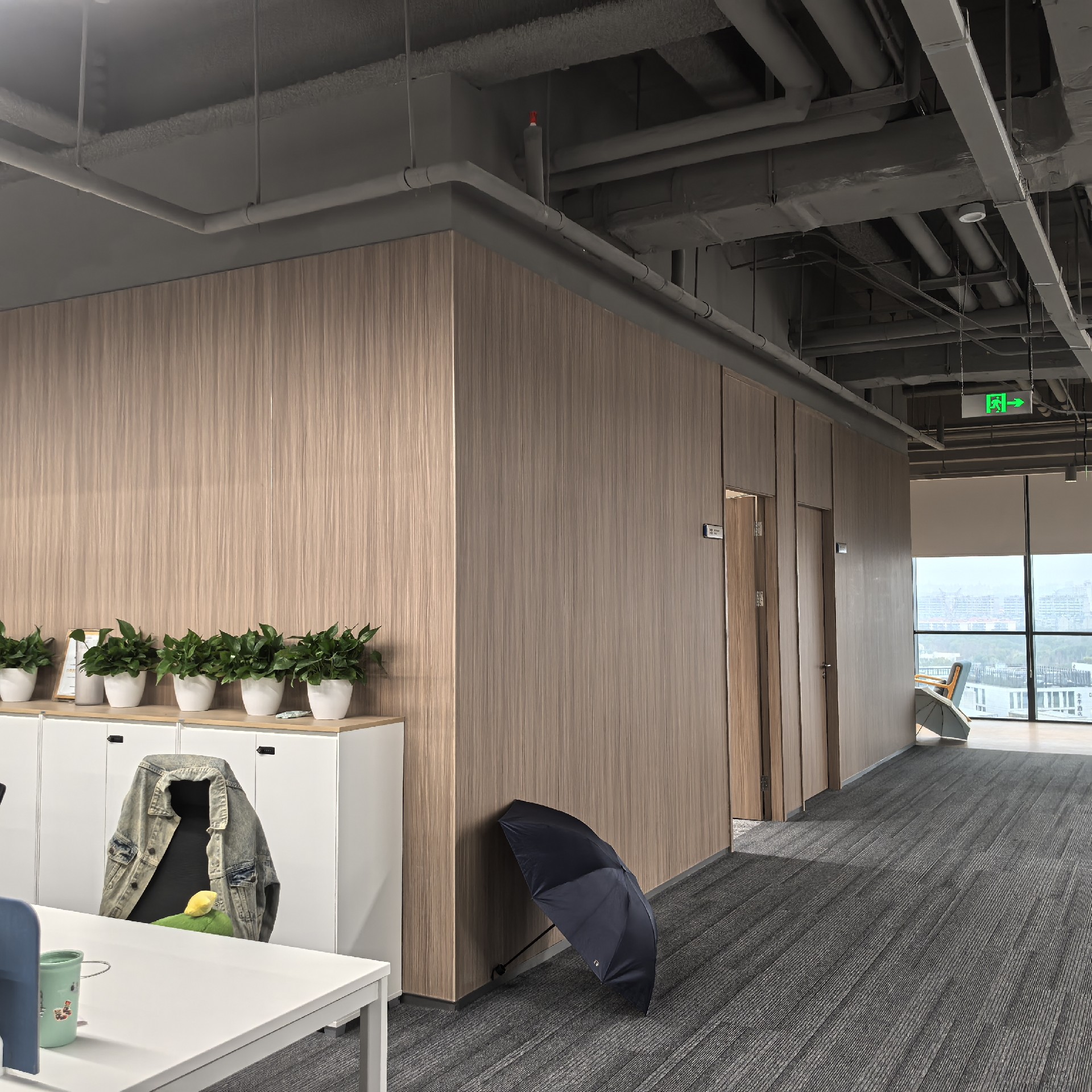
A Feature Wall Is a Working Surface, Not a Backdrop
Designers often choose a feature wall from a rendering first. A bold texture or metallic finish looks convincing in perspective, then the built wall reveals problems the image never showed: glare from downlights, visible joints, dust lines, and a flat acoustic response that makes the lobby feel louder than expected. Custom textured wall panels solve a different problem than paint or flat cladding. They turn the feature wall into a working surface that manages light, sound, and detailing at the same time. The visual result still matters, but the wall earns its place by performing in the room, not only in the image.
Texture Controls Light Before It Controls Style
The first job of texture on a feature wall is optical. A flat, glossy surface reflects light back into the room in a narrow cone. Under track lighting or recessed downlights, that cone becomes a hotspot. A shallow embossed texture breaks the reflection into smaller patches, which lowers peak luminance and softens the contrast between lit and unlit areas. A deeper 3D relief, typically in the 8 to 20 mm range, creates shadow lines that change as a person walks past. That movement adds depth without adding color or pattern. The design decision is not that more texture is always better. Relief depth should match the viewing distance and the lighting angle. A wall seen from two meters needs finer detail than a wall seen from a mezzanine. A matte finish also matters, because a sealed gloss face can erase the benefit of the relief.
Acoustic Comfort Is a Design Variable, Not an Afterthought
Feature walls in lobbies, restaurants, and open offices often sit in rooms with hard floors and glass. Those rooms can feel loud even when the mechanical system is quiet. A textured wall panel with a porous backing can absorb mid- and high-frequency energy while the face texture scatters reflections. ISO 11654 provides the weighted sound absorption rating that lets designers compare products on a common scale. The caveat is honest: a feature wall alone will not fix a room with excessive reverberation. It contributes absorption where the wall area is large and the backing is specified correctly. If the panel face is sealed and the backing is solid, the acoustic benefit drops. Texture and absorption are related, but they are not the same thing. Designers should ask for the backing specification and the test method, not just a texture sample.
Fire Performance and Material Chemistry Have to Be Specified Together
Interior wall finishes in commercial projects are usually subject to fire performance review. ASTM E84 Class A is a common requirement for wall finishes in corridors, lobbies, and assembly spaces. A textured panel can meet that requirement, but the full assembly matters: face material, substrate, adhesive, and backing. A decorative texture applied over a combustible core can change the classification. Designers should ask for the tested assembly, not just the face sample. Moisture and cleaning also belong in this conversation. In a humid lobby or a food service area, a panel with a closed-cell core and sealed edges holds its shape better than a paper-based substrate. The specification should name the core, the finish, and the test standard in one package.
| Feature wall option | Visual depth | Glare control | Acoustic contribution | Cleaning and moisture note |
|---|---|---|---|---|
| Flat high-gloss panel | Low | Poor under direct downlights | Low unless backed with absorptive layer | Easy to wipe, shows fingerprints and joints |
| Shallow embossed panel | Moderate | Good, breaks reflection | Low to moderate with porous backing | Dust settles in fine texture, needs soft brush |
| Deep fluted or 3D panel | High | Strong shadow play, but can trap dust | Moderate to high if backing is open | Specify depth and cleaning access early |
| Custom textured panel with sealed core | Adjustable | Good with matte finish and controlled relief | Tuneable through backing choice | Best balance for humid or high-traffic zones |
Joint Design and Fabrication Decide Whether the Wall Looks Custom or Cheap
A feature wall is judged at its seams. Wide joints, uneven shadow gaps, and mismatched panel edges destroy the effect faster than a weak texture. Custom textured wall panels require shop drawings that set out joint alignment, panel module, substrate fastening, and trim details. The texture itself influences joint design. A deep relief hides minor misalignment better than a flat surface, but it also creates more edge length to seal and clean. Fabricators who route and assemble the panels in a controlled shop environment produce tighter joints than site-cut panels. On a hospitality lobby project in a humid coastal city, the design team first specified a high-gloss flat feature wall behind the reception desk. The mockup showed two problems: downlights created a hard glare band at eye level, and the joint lines were visible from the entrance. The final specification moved to a medium-relief textured panel with a matte finish and a concealed joint layout. The wall still read as a feature, but the light was softer and the seams disappeared into the texture.
A Practical Specification Sequence for Designers
A reliable sequence starts with the room conditions, not the finish library. First, define the lighting angles and the viewing distances. Second, decide whether the wall needs acoustic absorption, and if so, specify the backing and the rating method. Third, confirm the fire performance requirement and the tested assembly. Fourth, select the relief depth and finish based on cleaning access and moisture exposure. Fifth, require a physical mockup under the actual lighting before approval. This order prevents the common failure where a beautiful sample is approved, then the built wall fails on glare or joint visibility. Andiwilson supports this sequence by keeping texture development, substrate selection, and finish control within a coordinated manufacturing and quality process, which helps designers move from a sample to a repeatable feature wall without losing the detail that made the concept work.
Table of Contents
- A Feature Wall Is a Working Surface, Not a Backdrop
- Texture Controls Light Before It Controls Style
- Acoustic Comfort Is a Design Variable, Not an Afterthought
- Fire Performance and Material Chemistry Have to Be Specified Together
- Joint Design and Fabrication Decide Whether the Wall Looks Custom or Cheap
- A Practical Specification Sequence for Designers