Maple Gym Flooring: Engineered Performance for Sports Facilities

Get a Free Quote

Our representative will contact you soon.
Email
Mobile/WhatsApp
Name
Company Name
Message
0/1000

A Resilient Hardwood System Engineered for Athletic Performance

Maple gym flooring is specified not for its surface alone but for the engineered subfloor system beneath it. Northern hard maple, rated around 1,450 lbf on the Janka scale, provides a dense, uniform wearing surface that resists indentation from footwear and equipment while maintaining consistent ball rebound. The performance that matters on a court—shock absorption, vertical deflection, area of deflection, and surface friction—is governed by how that maple is married to a resilient substructure of sleepers, pads, or combined elastic layers. Industry data places the global maple sports floor market at approximately USD 783 million in 2025, with projections indicating a 6.3% CAGR through 2032, driven by school and university refurbishment activity and the continued preference for maple in competitive basketball and volleyball environments.
Get A Quote

Case Study

School District Competition Court with Long-Term Budget Constraints

A mid-sized school district evaluating flooring for three gymnasiums compared a lower-cost synthetic quote against a maple system for the competition court. The district selected synthetic for two general-use gyms and a maple system for the primary competition venue. Over the following years, the synthetic surfaces developed dead spots and required panel replacement, while the maple court remained on its annual recoat schedule without structural intervention. The outcome was not that maple is universally cheaper per square foot—installed costs for standard maple systems commonly fall in the USD 8 to USD 22 range—but that a correctly specified and maintained maple system distributes its cost across a longer service life.

University Multipurpose Facility with MFMA and EN Compliance Requirements

A university indoor multi-sport facility specified northern hard maple strip flooring over a resilient subfloor, with compliance documentation referencing MFMA grading rules and EN 14904 performance categories. The maple strips were specified at 25/32-inch thickness with random-length tongue-and-groove and end-matched profiles, a common MFMA-RL configuration. The installation sequence was coordinated around a fixed facility opening, and the subfloor system was selected to provide shock absorption within the project’s stated performance target. Post-installation testing confirmed the assembly met the specified force-reduction and ball-rebound parameters, allowing the facility to host competitive volleyball and basketball under its intended certification framework.

Training Center with Portable Court and Heavy Cyclical Loading

A basketball training center required a playing surface that could accommodate repeated setup and takedown for multi-use programming alongside daily athlete loading. A portable maple system was specified, using MFMA-graded northern hard maple over a modular substructure. The maple surface tolerated the cyclical loading of sprinting, cutting, and landing drills without visible surface disruption, and the system retained its ball-rebound characteristics across the training season. The facility manager noted that the floor’s performance was assessed against the same MFMA PUR performance categories used for permanent installations, rather than being treated as a temporary or secondary surface.

Related products

Andiwilson approaches maple gym flooring as a system specification, not a strip-wood sale. The maple itself is northern hard maple, graded to MFMA rules and milled to thicknesses that commonly include 25/32-inch and 33/32-inch, with random-length or finger-jointed profiles depending on the system design. But the surface is only the top layer. Shock absorption, vertical deflection, area of deflection, ball bounce, and surface friction are properties of the complete assembly: maple over plywood or engineered panels, over sleepers, pads, or a combined elastic substructure. Andiwilson supplies maple flooring within a defined performance envelope, with documentation covering grade, moisture content at delivery, recommended acclimation conditions—commonly 35% to 50% relative humidity—and the maintenance protocol that preserves both playability and finish life. The specification does not claim that maple is the right surface for every room; it states what the maple system is designed to do, under which conditions, and what the facility must do to keep it performing. For buyers comparing quotes, that distinction between a board price and a system specification is where long-term value is actually determined.
Frequently Asked Questions

Is maple harder than oak for gym flooring?

Hard maple rates around 1,450 lbf on the Janka scale, compared with roughly 1,360 for white oak and 1,290 for red oak. That hardness helps the surface resist dents and wear under athletic loading, but gym floor performance depends more on the subfloor system than on species hardness alone.
MFMA grading rules list 1/2-inch, 25/32-inch, and 33/32-inch thicknesses, with 25/32-inch being a common specification for permanent athletic floors. Thicker maple allows more sandings over the floor’s life; 25/32-inch maple is often cited as capable of supporting multiple full resurfacing cycles when properly maintained.
Shock absorption is expressed as a percentage of impact force absorbed by the floor versus the athlete. Common performance targets reference a minimum average in the range of 50%, with MFMA PUR testing and EN 14904 categories providing standardized frameworks. The required value depends on the sport, level of play, and facility use.
MFMA guidance recommends annual screen-and-recoat maintenance for most gymnasiums, with a full sand-and-resurface typically required every 8 to 10 years depending on use and prior care. Skipping annual recoats can accelerate the need for full resurfacing and shorten the floor’s overall service life.
Yes, but the assembly must manage moisture. A vapor barrier or moisture mitigation layer is typically required, and the slab’s moisture condition should be verified before installation. The resilient subfloor system also creates a separation between the maple and the slab, which helps accommodate slight movement and supports the intended shock-absorption performance.

Related article

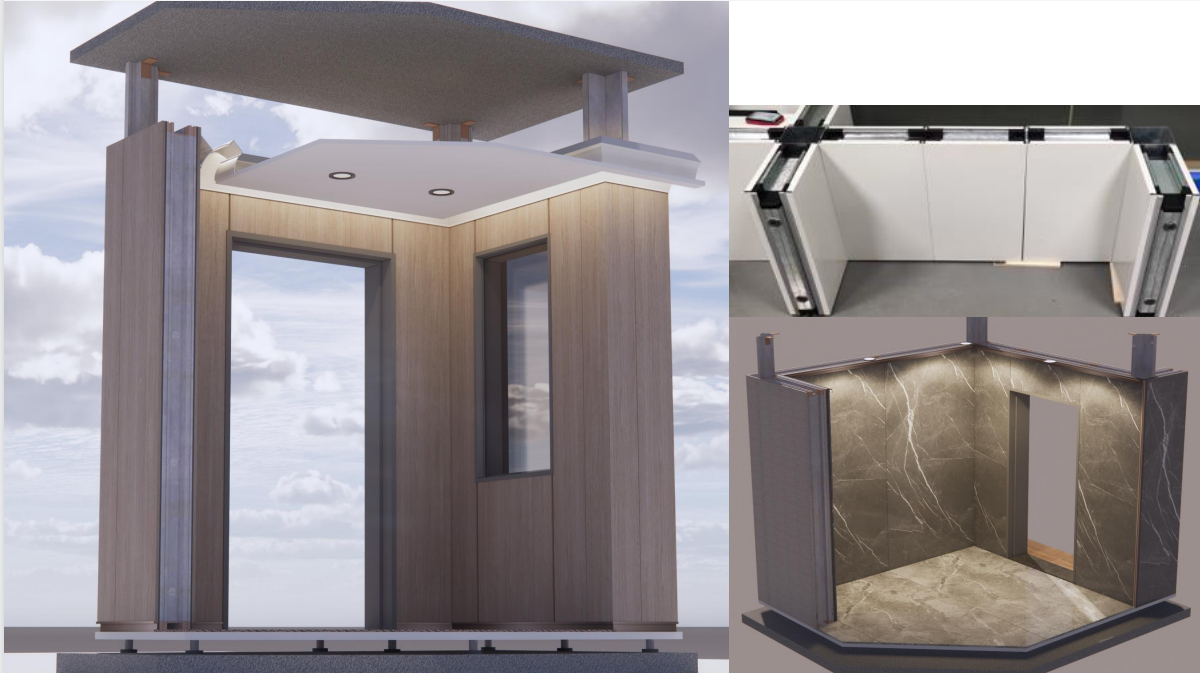
Prefabricated Modular Walls Take Another Leap Forward! Integrated Invisible Door Solutions Redefine the Boundaries of Spatial Aesthetics and Practicality

26

Jul

Prefabricated Modular Walls Take Another Leap Forward! Integrated Invisible Door Solutions Redefine the Boundaries of Spatial Aesthetics and Practicality

View More
Why Should Designers Use Custom Textured Wall Panels for Feature Walls?

07

Oct

Why Should Designers Use Custom Textured Wall Panels for Feature Walls?

A Feature Wall Is a Working Surface, Not a Backdrop Designers often choose a feature wall from a rendering first. A bold texture or metallic finish looks convincing in perspective, then the built wall reveals problems the image never showed: glare fr...
View More
How to Choose the Right High Pressure Laminate Finish for Your Interior Surfaces?

19

Oct

How to Choose the Right High Pressure Laminate Finish for Your Interior Surfaces?

Start With the Wear Layer, Not the Color Card High pressure laminate finish selection often begins with a color card and a visual preference. That sequence is backward. The finish on an HPL surface is a performance layer before it is a decorative lay...
View More
A Complete Guide to Choosing the Right Exterior Wall Laminated Panels for Your Next Project.

23

Oct

A Complete Guide to Choosing the Right Exterior Wall Laminated Panels for Your Next Project.

Fire Classification Comes Before Aesthetics Specifying exterior wall laminated panels for a new project usually begins with a finish sample, a color, and a profile. That order is risky. A facade panel on a commercial building is part of a life safety...
View More

Feedback from Facility Managers and Specifiers

Gregory Walsh

We manage a competition gymnasium that was specified with a 25/32-inch maple system over a pad-and-sleeper substructure. The floor has been through several seasons of volleyball and basketball use, and the annual recoat schedule has kept the surface playing consistently. What has mattered most is the documentation: the grade, thickness, and humidity targets were stated clearly enough for our maintenance team to follow. When we compared the projected lifecycle cost against a synthetic alternative, the maple system’s refinishing envelope made the long-term budget easier to defend.

Andrea Kim

As a specifier, I look for whether a supplier understands that maple gym flooring is an assembly, not a board. On a recent training facility project, the subfloor buildup and the maple thickness were coordinated so the shock-absorption and ball-rebound values could be reviewed before the order was released. The installation team confirmed moisture conditions on site, and the floor has performed without joint issues through a full heating season. The client valued having the performance categories stated in the same language used by the testing standard.

Get a Free Quote

Our representative will contact you soon.
Email
Mobile/WhatsApp
Name
Company Name
Message
0/1000
Janka Hardness Sets the Surface, Not the Whole Performance

Janka Hardness Sets the Surface, Not the Whole Performance

Hard maple’s Janka rating of approximately 1,450 lbf places it above white oak and red oak, which is one reason it has been the reference species for gymnasium floors for more than a century. But hardness alone does not determine shock absorption, ball bounce, or athlete safety. Those properties emerge from the interaction between the maple surface and the resilient substructure. A specification that states only “maple” without defining the system beneath it leaves the most important performance variables unresolved.
The Subfloor System Determines Shock Absorption and Joint Safety

The Subfloor System Determines Shock Absorption and Joint Safety

Maple gym flooring performance is defined by the complete assembly. Sleepers, rubber pads, plywood panels, and the maple strip layer work together to absorb impact forces that would otherwise transfer to athletes’ joints. MFMA PUR testing and EN 14904 categorise systems by measurable properties—force reduction, vertical deflection, area of deflection—rather than by species or thickness alone. This is why two maple floors with the same surface strip can behave differently underfoot. Specifiers should require system-level performance data, not just a wood grade.
Lifecycle Economics Favour Planned Maintenance Over Reactive Repair

Lifecycle Economics Favour Planned Maintenance Over Reactive Repair

A maple gym floor is a long-horizon asset. With annual screen-and-recoat maintenance and a full resurfacing every 8 to 10 years, a well-maintained 25/32-inch maple system can serve for decades. Reactive repairs, by contrast, cost more per square foot and often require extended facility closure. The budget case for maple is strongest when the facility commits to the maintenance protocol from the outset. The specification should state the humidity range, cleaning regime, and recoating interval that the floor’s performance and warranty depend on.
onlineONLINE