Red Oak Parquet Flooring: Janka 1,290 Hardness Guide

Get a Free Quote

Our representative will contact you soon.
Email
Mobile/WhatsApp
Name
Company Name
Message
0/1000

A Benchmark Hardwood with Proven Pattern Versatility

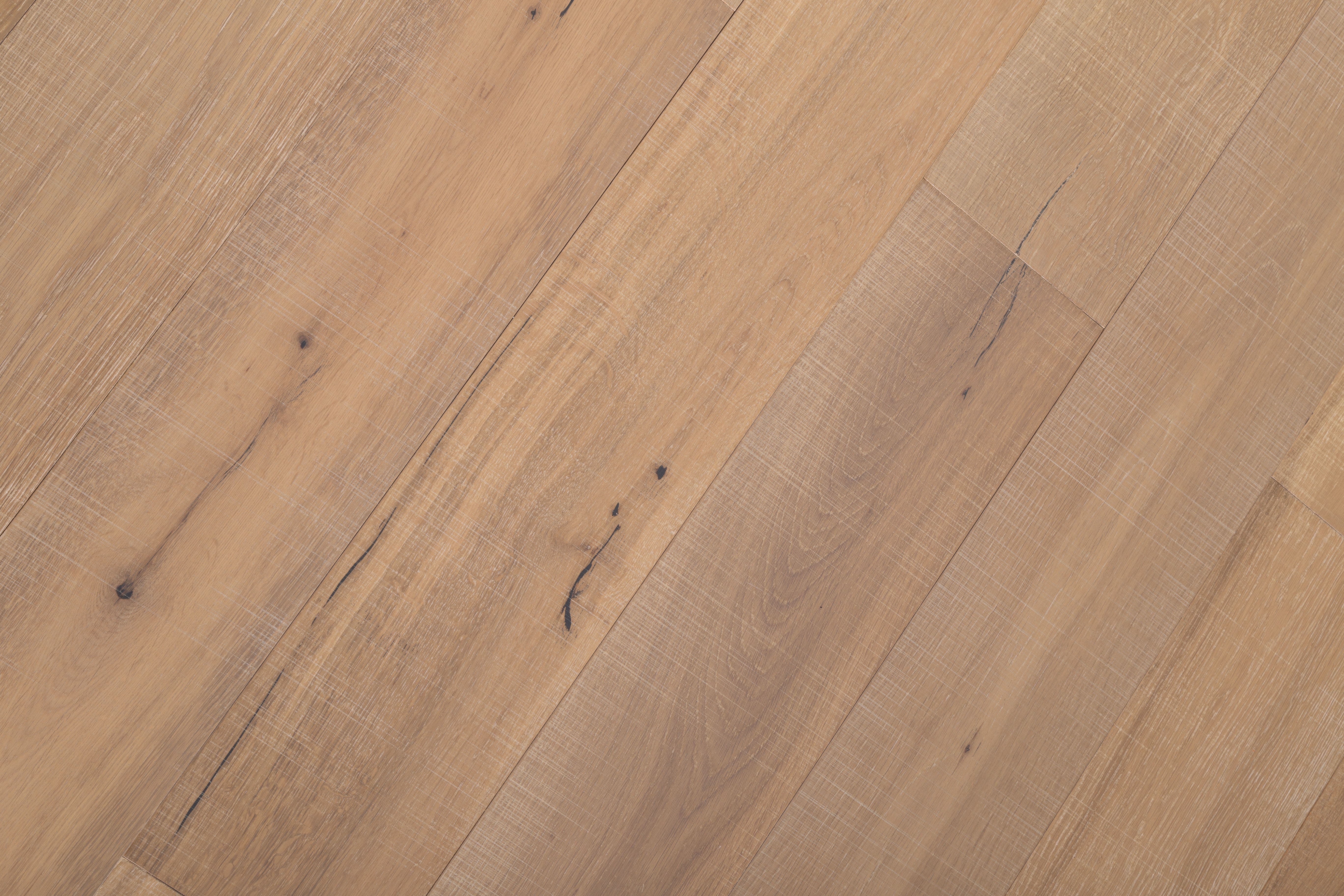
Red oak functions as the reference point on the Janka hardness scale at 1,290 lbf, a median rating that makes it neither exceptionally hard nor fragile. In practical specification terms, this means the floor accepts normal commercial and residential traffic without the dent sensitivity of softer species, while remaining workable for the precise angle cuts that herringbone and chevron parquet demand. Red oak also leads the hardwood flooring raw-material segment with approximately 35.8% market share, reflecting decades of availability and predictable machining behaviour. For parquet formats, that predictability matters: a species that mills cleanly at 45° or 60° allows tighter pattern alignment and fewer installation corrections.
Get A Quote

Case Study

Herringbone Installation in a Boutique Hotel Corridor

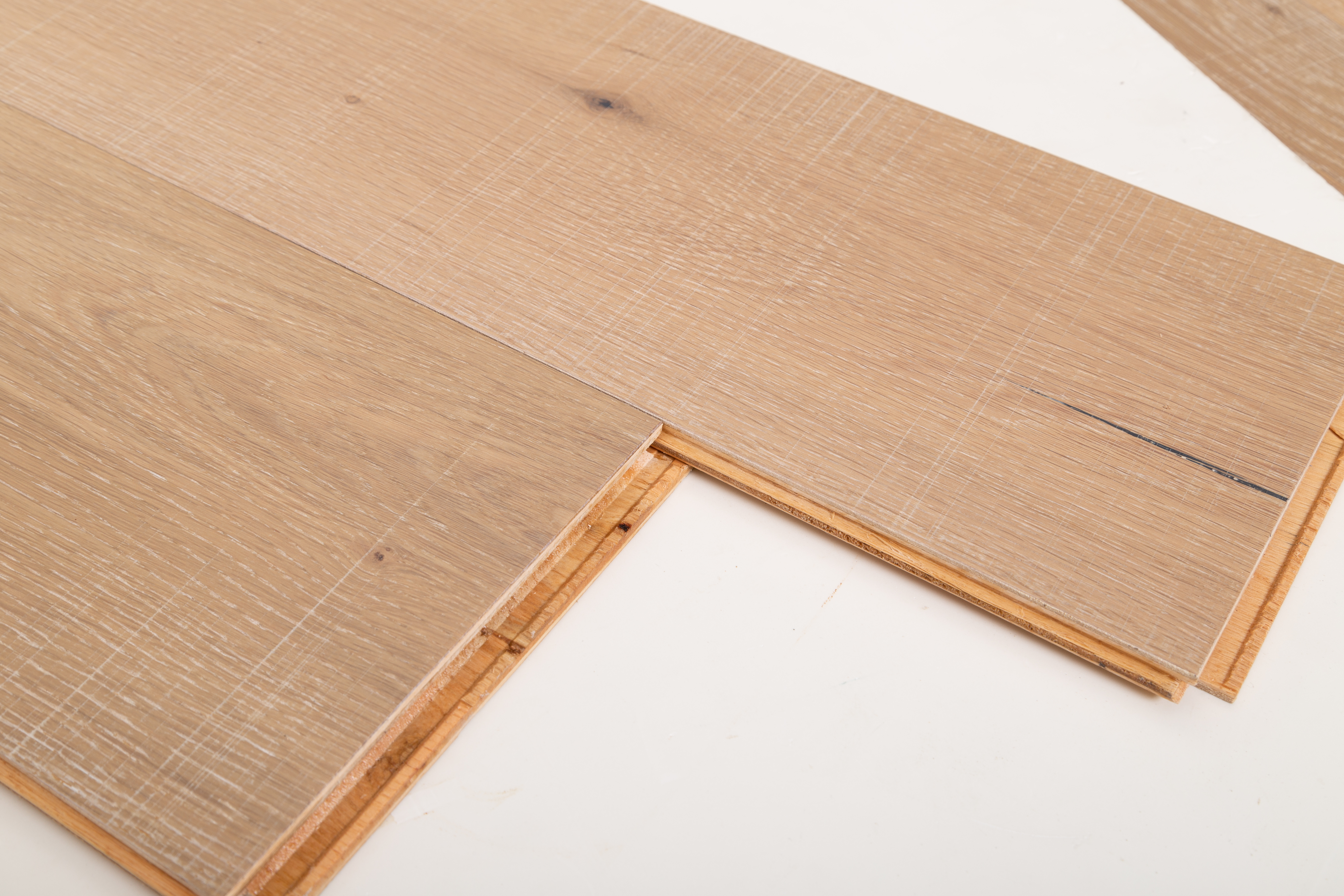
A hotel refurbishment specified engineered red oak herringbone for corridor and lounge areas where the design intent required a continuous, uninterrupted pattern across thresholds. The engineered construction used a 3.5mm oak wear layer over a plywood core, providing dimensional stability over a concrete slab with a verified moisture content below the project threshold. The herringbone panels were installed with a tongue-and-groove joint and a recommended expansion allowance at perimeters. After the first heating season, the pattern remained aligned at the V-points, and housekeeping reported that the matte surface did not show scuffing from luggage or trolleys.

Chevron Parquet Over a Refurbished Concrete Subfloor

An office reception area required a wood floor that could be installed over an existing concrete slab without an extensive levelling compound. The selected engineered chevron parquet measured 15mm in total thickness with a 4mm wear layer, within the common 12–15mm engineered parquet range and the 3–6mm wear-layer band typical for such constructions. The contractor confirmed slab relative humidity below 65% before adhesive bonding, consistent with common installation guidance. The chevron’s precise 45° end cuts allowed the V-joints to close tightly, and the reception desk transition was completed without a visible break in the pattern.

Wear-Layer Planning for a Long-Service Commercial Floor

A property owner evaluating red oak parquet for a leased commercial space asked a practical question: how many times can the floor be refinished? The answer depends on wear-layer thickness rather than species alone. Industry guidance recommends a minimum wear layer of 3mm for safe sanding, and engineered parquet in the 3.5–5.5mm range typically permits a defined number of full sand-and-finish cycles before the veneer reaches its limit. With a 5.5mm wear layer and a maintenance programme that avoids unnecessary aggressive sanding, the floor was specified with refinishing intervals planned around tenant changeovers rather than cosmetic wear.

Related products

Andiwilson approaches red oak parquet as a construction decision first and a species decision second. The same red oak that machines cleanly into herringbone or chevron can be built as a solid 16mm or 22mm board, or as an engineered panel with a plywood core and a 3mm to 6mm oak wear layer; those constructions behave differently over concrete, under underfloor heating, and across seasonal humidity swings. The parquet formats Andiwilson supplies are specified by pattern, thickness, wear-layer depth, and joint geometry, because a herringbone panel cut at 45° and a chevron panel cut at 60° are not interchangeable in layout planning. Wear-layer thickness is stated as a measured value, not a marketing adjective, and the refinishing envelope is described in terms of safe sanding cycles rather than open-ended longevity claims. Documentation covers moisture-content tolerances for concrete substrates, recommended relative humidity ranges during acclimation, and the expansion allowances required at perimeters and transitions. For projects where the visual rhythm of parquet is the design driver, that level of specification detail allows the pattern to be assessed alongside the practical conditions of the installation.

Frequently Asked Questions

Is red oak hard enough for commercial parquet flooring?

Red oak rates 1,290 lbf on the Janka scale, a median hardness suitable for moderate commercial traffic such as offices, hotel rooms, and retail interiors. For heavy-traffic public concourses, a harder species or a thicker wear layer with a commercial-grade finish should be evaluated against the expected traffic load.
Solid parquet is milled from a single piece of oak, typically 16mm or 22mm thick, and can be sanded and refinished multiple times. Engineered parquet uses a plywood core with a 3mm to 6mm oak wear layer, offering greater dimensional stability over concrete and underfloor heating, but with a finite refinishing envelope.
Yes, with appropriate moisture testing. Engineered parquet is generally preferred for concrete substrates because the cross-ply core resists moisture movement. Adhesive-bonded installations require the slab to be dry, commonly below 65% relative humidity, and a suitable moisture barrier or primer may be specified.
A wear layer of at least 3mm is recommended for safe sanding and refinishing. For commercial projects expecting multiple refurbishment cycles, a 4mm to 6mm wear layer provides a larger refinishing envelope. Thinner wear layers limit future sanding and are better suited to residential or low-traffic applications.
Yes. Herringbone and chevron require precise angle cuts and more layout planning than straight plank installations, which increases labour time. Smaller panel widths and complex transitions add further to installation complexity. The material cost of red oak itself is typically in the $3–$8 per square foot range, before installation.

Related article

What Makes Compact Laminate the Ultimate Choice for High-Moisture Environments?

29

Sep

What Makes Compact Laminate the Ultimate Choice for High-Moisture Environments?

The Failure Point Is Almost Never the Face Most moisture damage in built environments does not start on the visible surface. It starts at a cut edge, a drilled hole, a seam, or a junction where one material meets another. A laminate-faced MDF board...
View More
Why Should Designers Use Custom Textured Wall Panels for Feature Walls?

07

Oct

Why Should Designers Use Custom Textured Wall Panels for Feature Walls?

A Feature Wall Is a Working Surface, Not a Backdrop Designers often choose a feature wall from a rendering first. A bold texture or metallic finish looks convincing in perspective, then the built wall reveals problems the image never showed: glare fr...
View More
How Do Exterior Wall Laminated Panels Help Reduce Carbon Footprint in Construction?

12

Oct

How Do Exterior Wall Laminated Panels Help Reduce Carbon Footprint in Construction?

The Carbon Argument Starts With How Little Aluminium Goes Into the Panel A laminated exterior panel is not a thin coat of paint over a solid metal sheet. It is a sandwich. Two thin aluminium skins sit on either side of a core that does most of the di...
View More
How to Choose the Right High Pressure Laminate Finish for Your Interior Surfaces?

19

Oct

How to Choose the Right High Pressure Laminate Finish for Your Interior Surfaces?

Start With the Wear Layer, Not the Color Card High pressure laminate finish selection often begins with a color card and a visual preference. That sequence is backward. The finish on an HPL surface is a performance layer before it is a decorative lay...
View More

Feedback from Specifiers and Installers of Red Oak Parquet

Isabelle Hart

We specified engineered red oak herringbone for a 120-square-metre hotel lounge and corridor package. The main concern was pattern continuity across multiple rooms and doorways, and the panels arrived with consistent dimensions, which made the V-point alignment predictable. The 3.5mm wear layer suited the client’s maintenance budget, and after one full season the joints remained tight over the concrete slab. The documentation on moisture tolerances was clear enough to satisfy the building surveyor without back-and-forth.

Thomas Keller

As an installer, red oak parquet is familiar material, but the tolerances still matter. The chevron panels on this project were cut accurately, so the 45° joints closed without needing to force the points together. We laid about 55 square metres over a levelled slab with a moisture barrier, and the pattern ran true across the room. The oak took a hardwax oil finish evenly, and the client has since asked about using the same specification in a second reception area.

Get a Free Quote

Our representative will contact you soon.
Email
Mobile/WhatsApp
Name
Company Name
Message
0/1000
Janka 1,290 as a Median Benchmark, Not a Superlative Claim

Janka 1,290 as a Median Benchmark, Not a Superlative Claim

Red oak’s 1,290 lbf Janka rating is often described as the midpoint of the hardness scale rather than its summit. That median position is useful for parquet specification: the wood is hard enough to resist normal indentation from furniture and foot traffic, yet predictable enough to machine into precise herringbone and chevron angles without excessive tool wear. Specifiers comparing red oak against harder species should weigh the trade-off between dent resistance and workability rather than assuming higher hardness is universally better.
Wear-Layer Thickness Defines the Refinishing Envelope

Wear-Layer Thickness Defines the Refinishing Envelope

The number of times a red oak parquet floor can be sanded and refinished is governed by the wear layer, not the species. A 3mm layer is commonly treated as the minimum for safe sanding, and each full sanding cycle removes a measurable amount of oak. Engineered parquet with a 4mm to 6mm wear layer therefore offers a defined refinishing window, while thinner veneers are limited to light abrasion or recoating. Stating the wear layer as a measured value allows the owner to plan long-term maintenance realistically.
Pattern Precision Depends on Panel Tolerances Before Installation

Pattern Precision Depends on Panel Tolerances Before Installation

Herringbone and chevron are layout-critical patterns: a small dimensional drift at the factory becomes a visible V-point misalignment on site. The angle cuts and panel widths must be manufactured to tolerances that allow the pattern to close without on-site correction. This is a construction variable, not an aesthetic preference. Specifiers should confirm the stated width and angle tolerances for the selected parquet format and review how transitions at doorways and perimeters will be handled before the order is released.
onlineONLINE