 EN

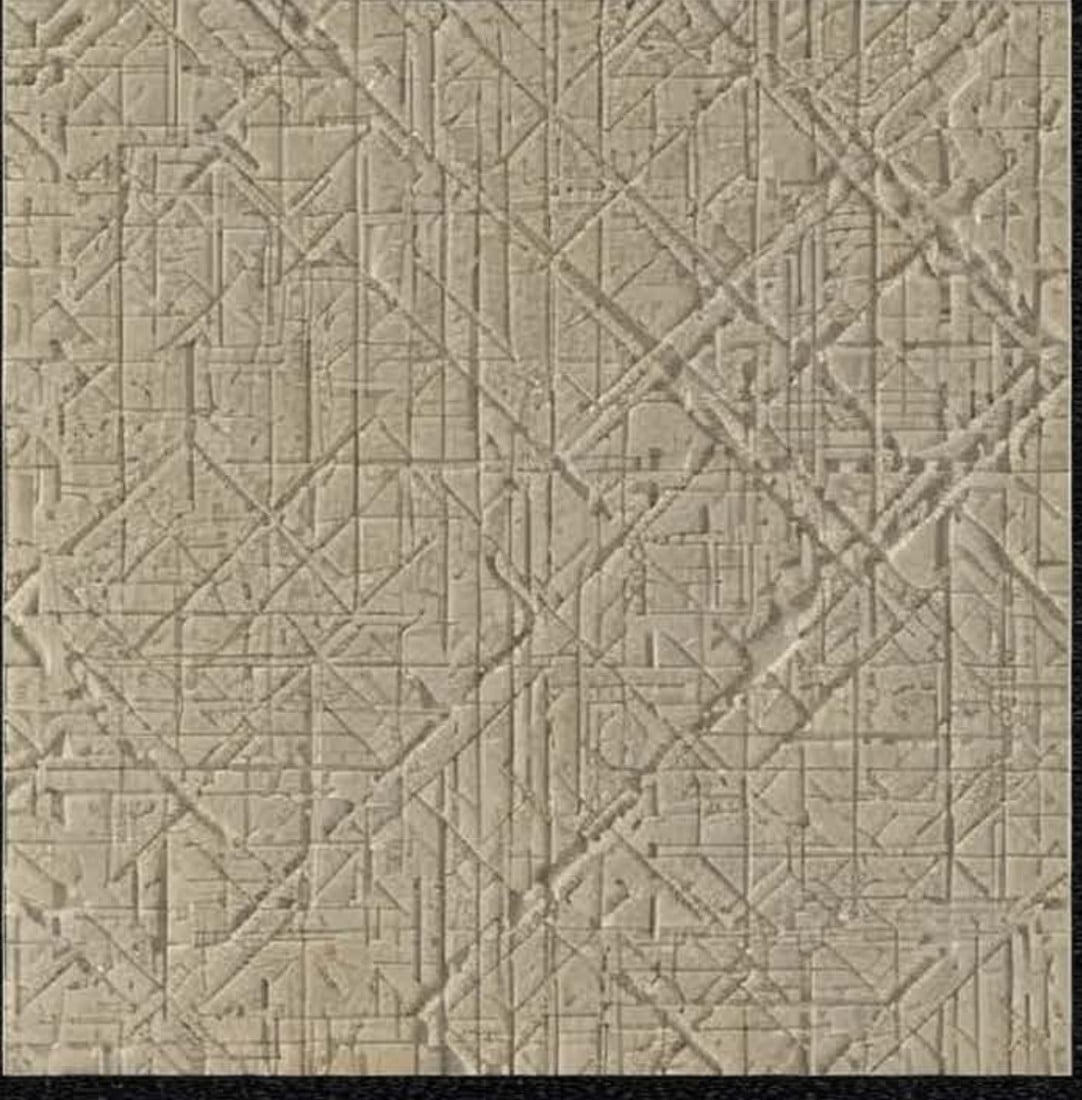
The Acoustic Problem That Decorative Finishes Alone Cannot Solve
Walk into a gallery with hard floors, high ceilings, and bare drywall, and the space tells you something immediately. Footsteps carry. Conversations from three rooms away bleed through. HVAC hum becomes a constant low-frequency companion. None of this is visible in a rendering, yet it shapes how every visitor experiences the work on the walls.
Museum acoustics is not about silence for its own sake. It is about removing the sonic noise floor so that attention can land where the curator intended. The ICC performance tables for assembly occupancies place art galleries, exhibit halls, and museums in the 30 to 40 NC range, a band that reflects the need for focused quiet without deadening the room entirely. Hitting the lower end of that range with conventional construction usually means adding absorptive baffles, ceiling clouds, or fabric-wrapped panels. Each of those adds visual clutter to a space where the architecture is supposed to recede.
Custom textured wall panels approach the problem from a different direction. The absorptive function is built into the surface itself. A porous substrate behind the texture catches mid- and high-frequency energy, while the relief pattern scatters reflections before they can organize into flutter echo. Architectural wood panel systems rated for gallery use reach NRC values up to 0.85 without looking like acoustic treatment. The wall does two jobs at once, and the second job disappears from view.
Moisture Is the Quiet Failure Mode in Gallery Envelopes
A gallery can pass every acoustic review and still fail the collection inside it. Cotton canvas, works on paper, and wood-panel paintings respond to relative humidity swings before anyone notices a problem visually. Outside the narrow 45 to 55 percent RH band, materials swell, seams open, and mold finds footholds in the parts of the wall assembly nobody inspects.
Conventional gypsum board and standard millwork offer limited resistance to vapor drive. When the building envelope experiences a condensation event, whether from a sudden temperature drop or a construction defect, moisture migrates through the wall cavity and reaches the back of the finished surface. Waterproof wall panels with a closed-cell core and factory-sealed edges change that pathway. The panel becomes a continuous vapor barrier at the interior face, not an afterthought applied over a damp substrate. Technical guidance for high-humidity occupancies consistently points to Class I or II vapor control strategies in these assemblies for exactly this reason.
The trade-off is real and worth stating plainly. A fully sealed panel system limits the wall's ability to dry inward if moisture does get behind it. That makes installation quality and joint detailing non-negotiable. The panel is a safeguard, not a substitute for a competent envelope.
Texture as a Curatorial Instrument, Not a Finish Option
The word texture gets used loosely in design conversations, often as a stand-in for “something other than flat paint.” In a gallery context, texture operates on a more specific level. It controls how light lands on a surface, how the eye moves across a wall, and how a visitor's body is paced through a sequence of rooms.
A fluted profile running vertically from floor to ceiling pulls the eye upward and creates a subtle rhythm that can signal a transition between exhibition zones. A shallow embossed grain catches raking light from track fixtures and produces micro-shadows that soften glare without reducing illuminance on the objects. A deeper 3D relief, in the 8 to 20 millimeter range, introduces genuine shadow depth that changes as a visitor walks past, adding a temporal quality to the wall surface itself. None of these effects require a printed graphic or a applied mural. The geometry does the work.
There is a conservation dimension here that often gets overlooked. High-gloss finishes and perfectly flat surfaces bounce light back into the room and create hotspots that conservators flag during lighting reviews. A textured surface breaks up that reflection, distributing luminance more evenly across the wall plane. The same relief that carries the aesthetic narrative also reduces the peak glare that can degrade light-sensitive works over time.
Matching Relief Depth and Material to the Actual Gallery Conditions
Architects specifying these surfaces face a practical constraint: the visual drama of deep relief and the acoustic performance of a porous substrate do not always scale together. A 15 millimeter fluted profile with a sealed metallic finish behaves differently from a 3 millimeter embossed linen texture with an open backing. The specification has to start from the room conditions, not from a finish library.
| Specification variable | Shallow relief (0.5–3 mm) | Medium relief (3–8 mm) | Deep relief (8–20 mm) |
|---|---|---|---|
| Primary visual effect | Subtle grain, micro-shadow | Visible depth, defined shadow line | Sculptural, bold shadow play |
| Acoustic contribution | Low to moderate absorption, mostly diffuse | Moderate absorption with scattering | Absorption depends on substrate openness; sealed faces reflect |
| Best gallery fit | Large continuous wall planes, light-sensitive zones | Transition walls, feature segments | Accent walls, entry sequences, low-traffic areas |
| Moisture risk note | Joints easier to seal | Seal integrity depends on profile geometry | More edge length to detail and validate |
In a coastal museum renovation project in the southern United States, the design team initially specified a deep fluted profile across an entire 40-meter gallery wall. Physical mock-ups revealed two problems. The deep grooves collected dust in a way that the conservator flagged during a walkthrough, and the sealed metallic finish on the flutes reflected track lighting back toward a group of works on paper. The final specification shifted to a medium-relief embossed pattern in the light-sensitive zone and kept the deep fluted profile only on the entry sequence, where no collection objects were displayed. That kind of adjustment only surfaces when samples go up on a wall under the actual lighting, not in a finish binder.
OEM and ODM Flexibility Without Sacrificing Envelope Performance
The customization conversation in museum work usually begins with aesthetics and ends with a quiet worry about whether the custom surface will compromise the moisture and acoustic performance that made the panel suitable in the first place. That worry is legitimate. Embossing, laser etching, and image integration all involve heat, pressure, or material removal at the panel face. If those processes disturb the edge seal or open the closed-cell core, the vapor barrier argument collapses.
The workable approach treats customization and performance as co-specified, not sequential. The relief depth gets locked first, because depth dictates minimum panel thickness and backing requirements. Pattern and finish come second. Seal integrity gets validated on the actual profile, not on a flat control sample. A manufacturer with in-house prototyping and finish development can run those validations before the shop drawings are finalized, which is why the OEM and ODM relationship matters more in conservation environments than in standard commercial work. The brand Andiwilson builds its panel systems around this sequence, with manufacturing and quality control structured to keep texture development, acoustic backing placement, and edge sealing inside the same production flow rather than spread across separate suppliers.
What the Specification Workflow Should Actually Produce
A museum wall panel specification that only describes color and profile is incomplete. The document that conservators and facilities teams need includes joint alignment tolerances, substrate fastening patterns, acoustic backing placement, and a maintenance protocol that does not introduce moisture during cleaning. Those items are not decorative details. They determine whether the panel continues to function as a vapor barrier and an acoustic surface after five years of gallery operation.
The most reliable workflows bring conservators into sample review early, under gallery lighting, with the actual track fixtures and the actual objects in place or represented at full scale. Texture that looks refined under office fluorescents can read as coarse under a 3000K spot at a low angle. Glare that seems acceptable on a benchtop sample can become a conservation issue when the sample sits at eye level beside a watercolor. Physical mock-ups on site, inspected jointly by the architect, the conservator, and the installer, catch the mismatches that drawings cannot. Final documentation should capture what was installed, not only what was specified, because future interventions depend on knowing where the seals and backing actually sit inside the wall.
Table of Contents
- The Acoustic Problem That Decorative Finishes Alone Cannot Solve
- Moisture Is the Quiet Failure Mode in Gallery Envelopes
- Texture as a Curatorial Instrument, Not a Finish Option
- Matching Relief Depth and Material to the Actual Gallery Conditions
- OEM and ODM Flexibility Without Sacrificing Envelope Performance
- What the Specification Workflow Should Actually Produce