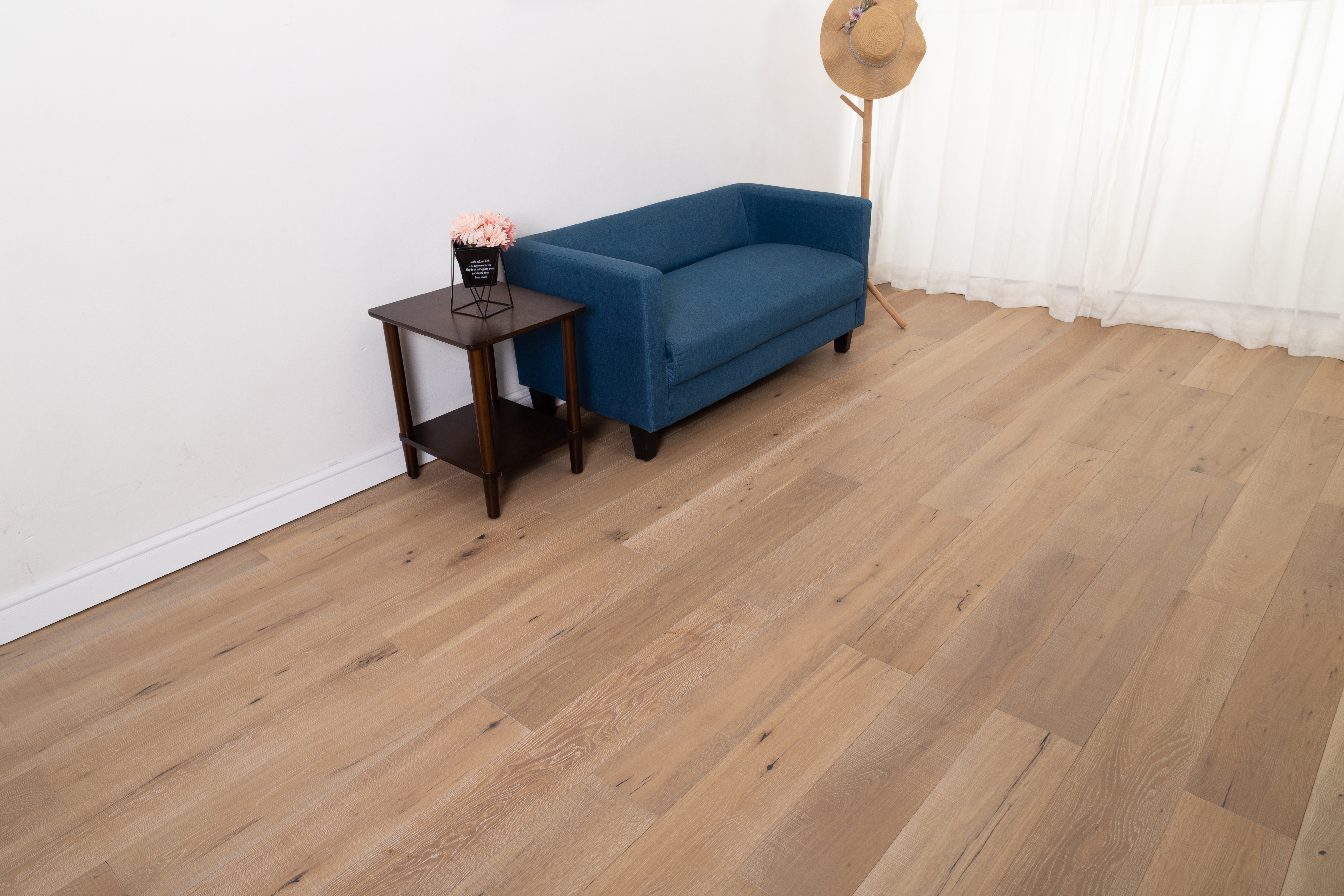
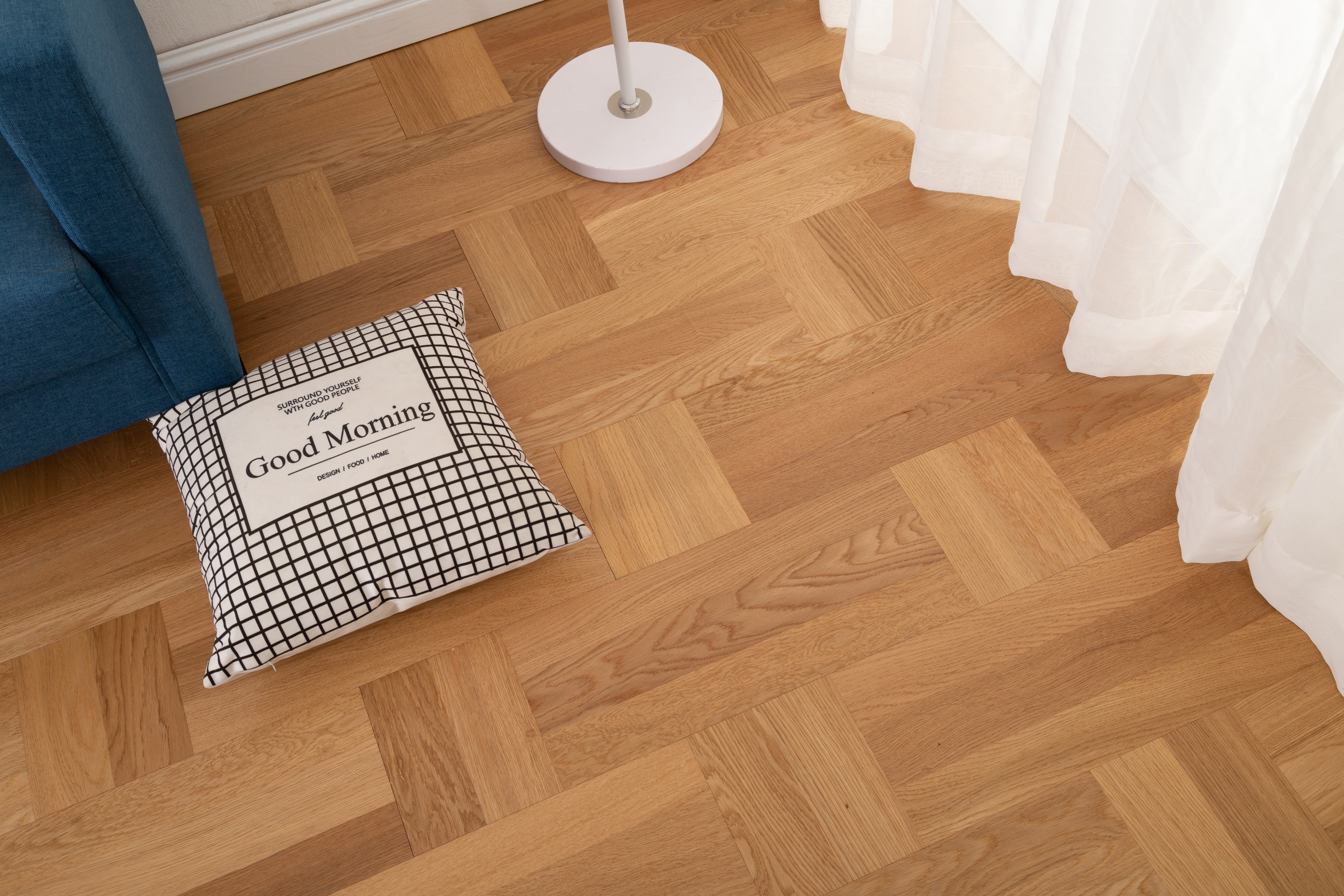
Red Oak Solid Hardwood Flooring: 4–6 Refinishing Cycles & Moisture Rules

Get a Free Quote

Our representative will contact you soon.
Email
Mobile/WhatsApp
Name
Company Name
Message
0/1000

A Median-Hardness Benchmark with a Measurable Refinishing Envelope

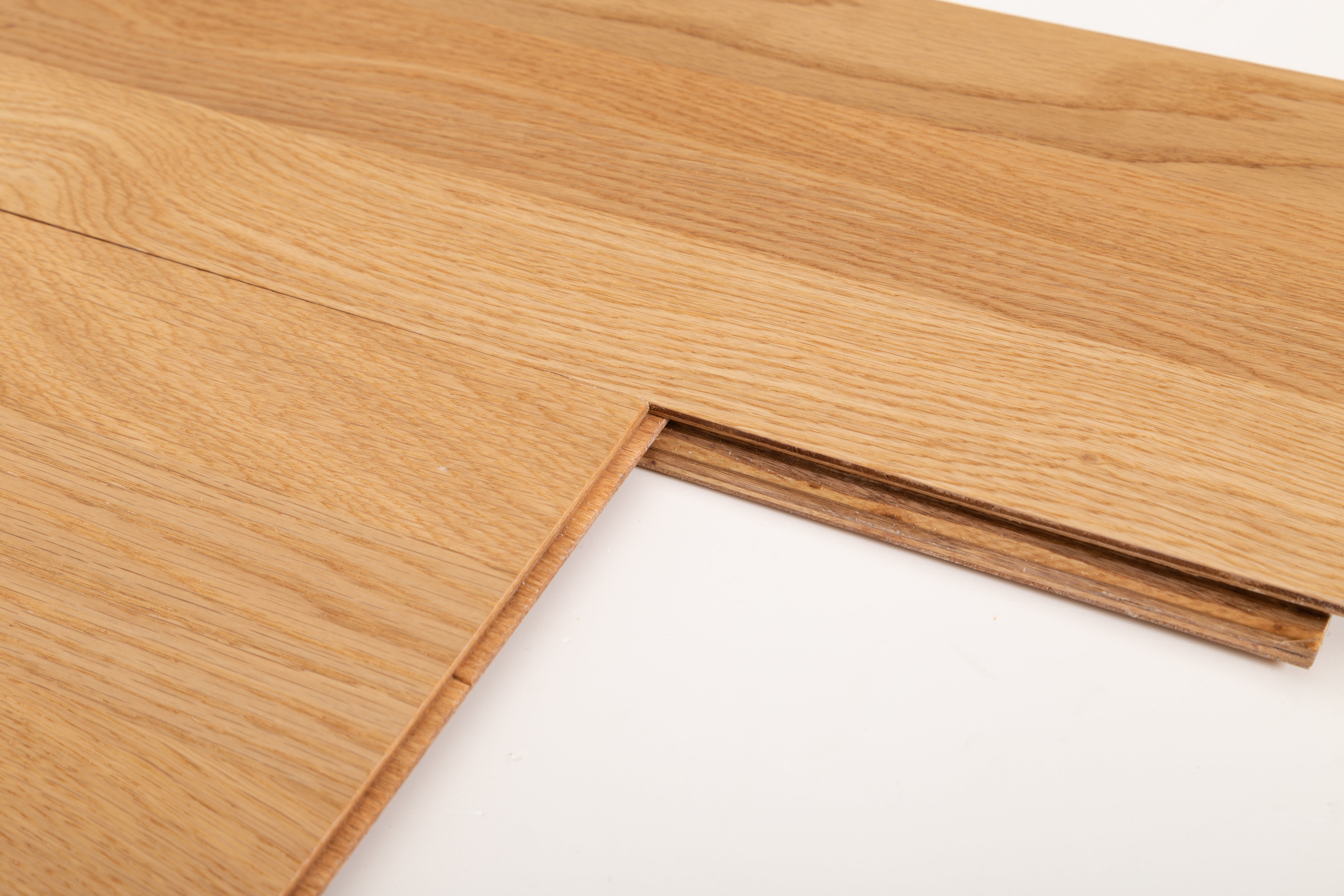
Red oak’s 1,290 lbf Janka rating is often described as the median of the hardness scale rather than its peak, and that median position is precisely what makes it a dependable specification baseline. The species is hard enough to accept normal residential and light commercial traffic without the dent sensitivity of softer woods, yet predictable enough to machine consistently at ¾-inch thickness across standard plank widths. The global solid oak flooring market was valued at approximately RMB 658 billion in 2025, with projections indicating a 2.72% CAGR through 2032, and red oak remains a significant segment within that total. For buyers comparing solid options, the practical question is less about hardness superlatives and more about how many times the floor can be sanded, and under what moisture conditions it will stay flat.
Get A Quote

Case Study

Auditorium and Public Hall Specification with Acoustic and Aesthetic Demands

A performing arts venue required a solid red oak floor for a 1,600-seat hall where the wood surface would be visible under stage lighting and subject to concentrated foot traffic during events. The specification called for 3-inch red oak strip over a plywood subfloor, installed by cleat nailing with fasteners spaced at 8 to 10 inches and set 2 to 3 inches from board ends. Subfloor flatness was held within 3/16 inch over 10 feet, and a ½-inch perimeter expansion gap was maintained around all fixed vertical structures. The floor was finished on site and has remained in service through repeated event cycles without joint separation.

Residential Long-Hold with Planned Refinishing Intervals

A homeowner evaluating solid red oak for a main-floor renovation asked the practical question: how many sand-and-refinish cycles can a ¾-inch floor support before the wear layer becomes too thin? Industry guidance treats 3/32 inch as the minimum wear layer for safe sanding, with each full sanding removing a measurable amount of oak. While field opinions vary, a common range for ¾-inch solid red oak falls between four and six full refinishing cycles over a service life that can extend for decades. The owner selected a 3¼-inch plank width, planned a full sand-and-refinish at the first major colour change, and adopted a screen-and-recoat maintenance schedule to extend the interval between full sandings.

A Basement Installation Outside the Approved Envelope

A renovation specified solid red oak over a below-grade concrete slab, relying on a thin roll-on membrane as the only moisture control. The installation guidance for solid hardwood states clearly that the product is approved for wood subfloors only, that concrete installation is outside the warranty envelope, and that subfloor moisture content must not exceed 12% with no more than a 4% differential to the flooring. Within the first humid season, the planks exhibited edge swelling and cupping. The remediation required removal of the affected area and replacement with an engineered product suited to below-grade conditions. The failure was not a material defect but an installation outside the product’s stated limits.

Related products

Andiwilson supplies red oak solid hardwood flooring as a ¾-inch milled product with a defined installation envelope, not as a universal floor for every room. The construction is solid northern red oak, available in strip and plank widths, with tongue-and-groove profiles intended for nail-down or staple-down installation over approved wood subfloors. The installation guidance is specific: fasteners at 8 to 10 inches, 2 to 3 inches from board ends; subfloor flatness within 3/16 inch over 10 feet; a minimum ½-inch expansion gap at all fixed vertical structures; and acclimation in the installation environment with relative humidity maintained between 35% and 55%. Subfloor moisture content must not exceed 12%, and the differential between subfloor and flooring is held to 4% or less. These are not generic precautions; they are the conditions under which the floor’s dimensional behaviour remains predictable. Andiwilson documents the refinishing envelope as well: ¾-inch red oak can support a defined number of full sand-and-refinish cycles before the wear layer reaches the 3/32-inch threshold. The specification states what the floor is designed to do, where it is approved to be installed, and what the owner must do to preserve both finish and service life.
Frequently Asked Questions

What subfloor is approved for solid red oak flooring?

Solid red oak is approved for nail-down or staple-down installation over wood subfloors only. Plywood or OSB subfloor panels should be at least ¾ inch thick, clean, dry, and structurally sound. Installation over concrete, vinyl, carpet, or radiant-heated floors is outside the standard approved envelope for solid hardwood.
Subfloor moisture content should not exceed 12%, and the differential between the subfloor and the flooring should be no more than 4%. A wood moisture meter should verify both readings before installation. Excessive differential is a common cause of cupping, gapping, and fastener movement after occupancy begins.
Field experience and industry guidance commonly cite four to six full sand-and-refinish cycles for ¾-inch solid red oak, though the actual number depends on wear-layer thickness, sanding technique, and prior maintenance. The 3/32-inch wear layer is often treated as the minimum for safe sanding. Screen-and-recoat maintenance can extend the interval between full sandings.
Yes. Acclimation is required in the installation environment, with relative humidity maintained between 35% and 55% and temperature between 65°F and 80°F before, during, and after installation. Solid hardwood should remain in unopened packaging, laid flat, for the acclimation period. Seasonal gaps from humidity fluctuation are considered normal behaviour, not defects.
No, not within the standard approved envelope. Solid hardwood installation guidance generally restricts the product to above-grade and on-grade wood subfloors. Below-grade concrete slabs present moisture conditions that solid red oak is not designed to tolerate. Engineered flooring or a subfloor system that creates an above-grade cavity is the appropriate solution for basement applications.

Related article

Quartz Fiber Board for Medical and Commercial Buildings: A New Generation of A-Class Fireproof Decorative Wall Panels

30

Jul

Quartz Fiber Board for Medical and Commercial Buildings: A New Generation of A-Class Fireproof Decorative Wall Panels

View More
How Do Exterior Wall Laminated Panels Help Reduce Carbon Footprint in Construction?

12

Oct

How Do Exterior Wall Laminated Panels Help Reduce Carbon Footprint in Construction?

The Carbon Argument Starts With How Little Aluminium Goes Into the Panel A laminated exterior panel is not a thin coat of paint over a solid metal sheet. It is a sandwich. Two thin aluminium skins sit on either side of a core that does most of the di...
View More
How to Choose the Right High Pressure Laminate Finish for Your Interior Surfaces?

19

Oct

How to Choose the Right High Pressure Laminate Finish for Your Interior Surfaces?

Start With the Wear Layer, Not the Color Card High pressure laminate finish selection often begins with a color card and a visual preference. That sequence is backward. The finish on an HPL surface is a performance layer before it is a decorative lay...
View More
A Complete Guide to Choosing the Right Exterior Wall Laminated Panels for Your Next Project.

23

Oct

A Complete Guide to Choosing the Right Exterior Wall Laminated Panels for Your Next Project.

Fire Classification Comes Before Aesthetics Specifying exterior wall laminated panels for a new project usually begins with a finish sample, a color, and a profile. That order is risky. A facade panel on a commercial building is part of a life safety...
View More

Feedback from Installers and Long-Term Owners

Caroline Reyes

We installed ¾-inch red oak in a 1,400-square-foot main floor, nailed over a plywood subfloor with cleats at the recommended spacing. The key issue on this job was moisture: we tested the subfloor at 9% and the flooring at 8%, well within the 4% differential, and held the house at 45% relative humidity through the first winter. Two seasons later, the floor has no cupping and the joints are tight. The homeowner has already booked a screen-and-recoat for year three, and the plan is to defer full sanding until a colour change is actually wanted.

Alan Prescott

From an installer’s perspective, solid red oak is predictable material if the site conditions are right. We nailed just under 900 square feet over a ¾-inch plywood subfloor, checked flatness at 3/16 inch over 10 feet, and left a ½-inch gap at every wall and cabinet. The boards milled consistently and the cleats held without splitting at the ends. The one job we walked away from was a basement slab inquiry: solid oak over concrete without a cavity system is outside the approved method, and we would rather decline than install a floor that cannot perform.

Get a Free Quote

Our representative will contact you soon.
Email
Mobile/WhatsApp
Name
Company Name
Message
0/1000
The 4% Moisture Differential Is the Load-Bearing Specification

The 4% Moisture Differential Is the Load-Bearing Specification

Solid red oak does not fail because the species is unsuitable; it fails when the moisture relationship between the wood and its environment is wrong. The installation guidance sets a subfloor moisture ceiling of 12% and a differential of no more than 4% between subfloor and flooring. Those figures are not arbitrary. They define the equilibrium range within which the floor can expand and contract without cupping, gapping, or loosening at the fasteners. A specification that states the species and width but omits the moisture differential has left the most consequential variable undefined.
Refinishing Cycles Are a Finite Budget, Not an Infinite Promise

Refinishing Cycles Are a Finite Budget, Not an Infinite Promise

A ¾-inch solid red oak floor can be sanded and refinished multiple times, but each sanding consumes a measurable amount of the wear layer. The 3/32-inch threshold is commonly treated as the minimum for safe sanding. Practical experience suggests a range of four to six full refinishing cycles for ¾-inch material, depending on equipment and technique. That is a substantial service life, but it is still a budget. Planning screen-and-recoat maintenance between full sandings preserves that budget rather than spending it on cosmetic refreshes.
Below-Grade Concrete Is a Different Product Question

Below-Grade Concrete Is a Different Product Question

Solid red oak is approved for wood subfloors. When a project presents a below-grade concrete slab, the appropriate response is not to specify solid hardwood with a thin membrane and hope for the best. The moisture conditions at a below-grade slab fall outside the product’s stated installation envelope. Engineered flooring or a subfloor cavity system that separates the wood from the concrete is the specification that matches the site. Stating the approved substrate clearly protects the buyer from a failure that the material was never designed to prevent.
onlineONLINE