Waterproof Bamboo Flooring for Humid Rooms | Andiwilson

Get a Free Quote

Our representative will contact you soon.
Email
Mobile/WhatsApp
Name
Company Name
Message
0/1000

Andiwilson Waterproof Bamboo Flooring for Humid-Room Interiors

Strand-woven bamboo is compressed under heat and pressure into a dense plank, which gives it a firmer feel underfoot than many wood-based boards. Andiwilson reviews bamboo density, adhesive system, core construction and edge sealing before specification. Illustrative projects include family kitchens, restaurant dining rooms and hotel bathroom dry zones. Bamboo takes up moisture through seams and edges, so joint detailing and acclimatisation are agreed early. Colour varies between strips, and batch matching is discussed before order. The term waterproof is treated as a product claim to be checked against technical documents, not an absolute promise.
Get A Quote

Case Study

Strand-Woven Bamboo in a Family Kitchen

An illustrative family kitchen used 14 mm strand-woven bamboo across 32 m², chosen for its density and resistance to dents from dropped utensils. The fabricator sorted planks by shade before laying to spread natural colour variation. Bamboo strips were acclimatised in the room, and cut ends at cabinet returns were sealed. A tiled utility threshold met the bamboo at a slim profile. The household agreed damp wiping and immediate drying of splashes. The brief covered density, shade sorting and sealed cuts, with performance checked against technical documents.

Engineered Bamboo in a Hotel Bathroom Dry Zone

An illustrative hotel used 10 mm engineered bamboo in bathroom dry zones and dressing areas, with showers kept tiled. The engineered build combined a bamboo wear layer with a stabilised core, which helped with dimensional control near washbasins. Pipe collars and wall gaps were sealed, and a threshold profile separated bamboo from tile. Planks were conditioned before fitting and sorted by tone across each room. Housekeeping agreed towel-drying of splashes. Two spare planks per floor were held. The brief addressed core stability, sealing and shade consistency.

Restaurant Dining Room with Tiled Kitchen Beyond

An illustrative restaurant used 12 mm strand-woven bamboo across a 95 m² dining room, with the kitchen floor kept in tile. Bamboo was selected for its hardness under chair movement and its warm tone against dark joinery. A sealed profile marked the kitchen boundary. Planks were sorted by shade and laid away from the main entrance to reduce grit tracking. Staff agreed damp mopping after service and prompt drying of spills. The brief focused on dent resistance, colour blending and boundary detailing, with claims limited to documented performance.

Related products

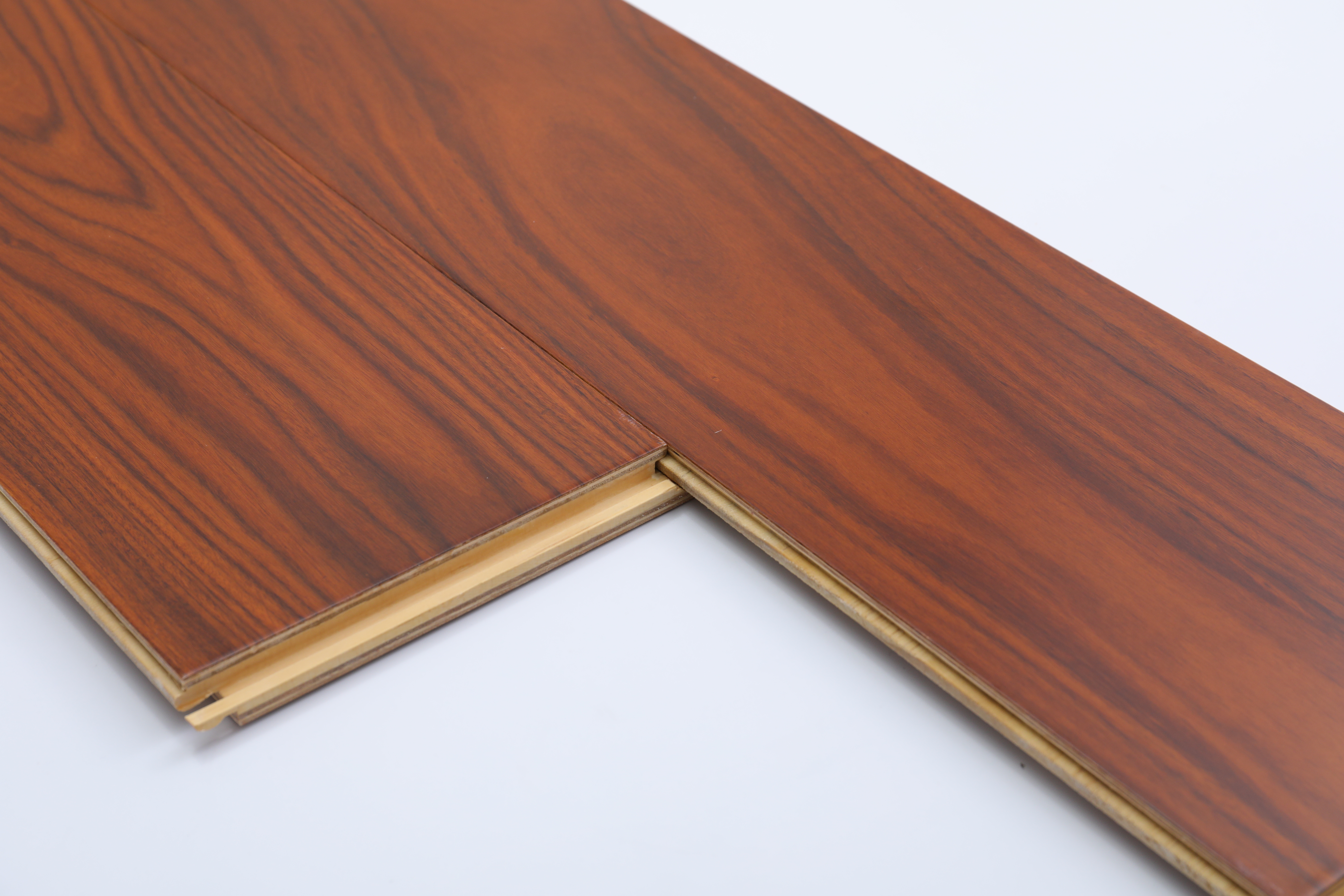
Bamboo flooring begins with bamboo strips that are carbonised or natural, then pressed with adhesive under heat and pressure. Strand-woven bamboo compresses strands into a dense board, while engineered bamboo bonds a bamboo wear layer to a stabilised core. Density, adhesive type and core construction affect how the plank behaves near humidity. Andiwilson reviews these points together with edge sealing, acclimatisation and subfloor moisture before order. Illustrative specifications use 10–14 mm planks in kitchens, restaurant dining rooms and bathroom dry zones. Bamboo strips vary in shade, so sorting planks before laying helps blend tone across a room. Cut ends and pipe collars need sealing, and tiled wet areas are separated by threshold profiles. Andiwilson provides care notes covering damp wiping, prompt drying of splashes and edge checks. Because bamboo responds to moisture and the term waterproof is a product claim, project teams should confirm technical documents and installation guidance before ordering.

Frequently Asked Questions

How does strand-woven bamboo differ from engineered bamboo?

Strand-woven bamboo compresses bamboo strands into a dense board, while engineered bamboo bonds a bamboo layer to a stabilised core. Strand-woven tends to feel harder and heavier; engineered offers more dimensional control. Andiwilson advises comparing density, core and thickness against the room conditions before choosing.
Bamboo takes up and releases moisture, so planks can move with humidity. Acclimatisation, expansion gaps and sealed edges help manage this. Andiwilson advises checking subfloor moisture and room ventilation, and confirming expansion allowances in the installation guidance before fitting in kitchens or bathrooms.
Strand-woven bamboo is often dense and resists dents from dropped items, but hardness varies by product and direction of grain. Furniture feet and chair glides still matter. Andiwilson advises comparing density figures and samples rather than assuming every bamboo plank performs like strand-woven board.
Bamboo planks are bonded with adhesives during pressing, and adhesive type affects indoor air considerations. Andiwilson advises requesting current documentation on adhesive and emissions where a project requires it. Site-applied adhesives for glue-down installation should also be checked against the selected system.
Solid strand-woven bamboo can sometimes be sanded when thickness allows, while engineered bamboo depends on wear layer depth. The number of cycles varies. Andiwilson advises checking plank construction and current guidance, and using an experienced contractor before scheduling refinishing, because site conditions affect the result.

Related article

Why Should Designers Use Custom Textured Wall Panels for Feature Walls?

07

Oct

Why Should Designers Use Custom Textured Wall Panels for Feature Walls?

A Feature Wall Is a Working Surface, Not a Backdrop Designers often choose a feature wall from a rendering first. A bold texture or metallic finish looks convincing in perspective, then the built wall reveals problems the image never showed: glare fr...
View More
How Do Exterior Wall Laminated Panels Help Reduce Carbon Footprint in Construction?

12

Oct

How Do Exterior Wall Laminated Panels Help Reduce Carbon Footprint in Construction?

The Carbon Argument Starts With How Little Aluminium Goes Into the Panel A laminated exterior panel is not a thin coat of paint over a solid metal sheet. It is a sandwich. Two thin aluminium skins sit on either side of a core that does most of the di...
View More
How to Choose the Right High Pressure Laminate Finish for Your Interior Surfaces?

19

Oct

How to Choose the Right High Pressure Laminate Finish for Your Interior Surfaces?

Start With the Wear Layer, Not the Color Card High pressure laminate finish selection often begins with a color card and a visual preference. That sequence is backward. The finish on an HPL surface is a performance layer before it is a decorative lay...
View More
A Complete Guide to Choosing the Right Exterior Wall Laminated Panels for Your Next Project.

23

Oct

A Complete Guide to Choosing the Right Exterior Wall Laminated Panels for Your Next Project.

Fire Classification Comes Before Aesthetics Specifying exterior wall laminated panels for a new project usually begins with a finish sample, a color, and a profile. That order is risky. A facade panel on a commercial building is part of a life safety...
View More

Bamboo Project Planning Notes

Laura Chen

An illustrative kitchen note described 14 mm strand-woven bamboo across 32 m², selected for density and dent resistance. Planks were sorted by shade before laying to spread natural colour variation, and cut ends at cabinet returns were sealed. A slim profile met the tiled utility threshold. The household agreed damp wiping and immediate drying of splashes. The note covered density, shade sorting and sealed cuts, with performance checked against technical documents.

James Patel

An illustrative hotel note described 10 mm engineered bamboo in bathroom dry zones, with showers kept tiled. The stabilised core helped with dimensional control near washbasins, and pipe collars were sealed. Planks were conditioned and sorted by tone for each room. Housekeeping agreed towel-drying of splashes, and two spare planks per floor were held. The note addressed core stability, sealing and shade consistency, with claims limited to documented performance.

Get a Free Quote

Our representative will contact you soon.
Email
Mobile/WhatsApp
Name
Company Name
Message
0/1000
Strand Density and Dent Resistance

Strand Density and Dent Resistance

Strand-woven bamboo is pressed from bamboo strands into a dense board, which can resist dents from dropped utensils and chair movement. Andiwilson discusses density, thickness and adhesive system before specification. In an illustrative restaurant, 12 mm strand-woven planks were chosen for a dining room with heavy chair use. Density figures and samples were compared rather than assumed. The aim is a build-up suited to the room, not a universal hardness claim. Technical documents should be checked before ordering.
Colour Variation and Shade Sorting

Colour Variation and Shade Sorting

Bamboo strips vary in tone, and carbonised and natural strips differ noticeably. Sorting planks by shade before laying helps blend colour across a room. Andiwilson discusses batch references and sample approval before order. In an illustrative kitchen, planks were sorted before fitting to spread variation. In a hotel, planks were grouped by tone for each room. The aim is a balanced appearance, not a promise of identical colour. Approved samples should be retained for future reference.
Adhesive, Core and Indoor Air Checks

Adhesive, Core and Indoor Air Checks

Bamboo planks are bonded with adhesives during pressing, and engineered formats add a core layer. Adhesive type and core construction affect indoor air considerations and dimensional behaviour. Andiwilson advises requesting current documentation where a project requires emissions or adhesive details. In an illustrative hotel, the engineered core helped with dimensional control near washbasins, and sealing was agreed at pipe collars. Core and adhesive questions should be raised early with the supplier.
onlineONLINE