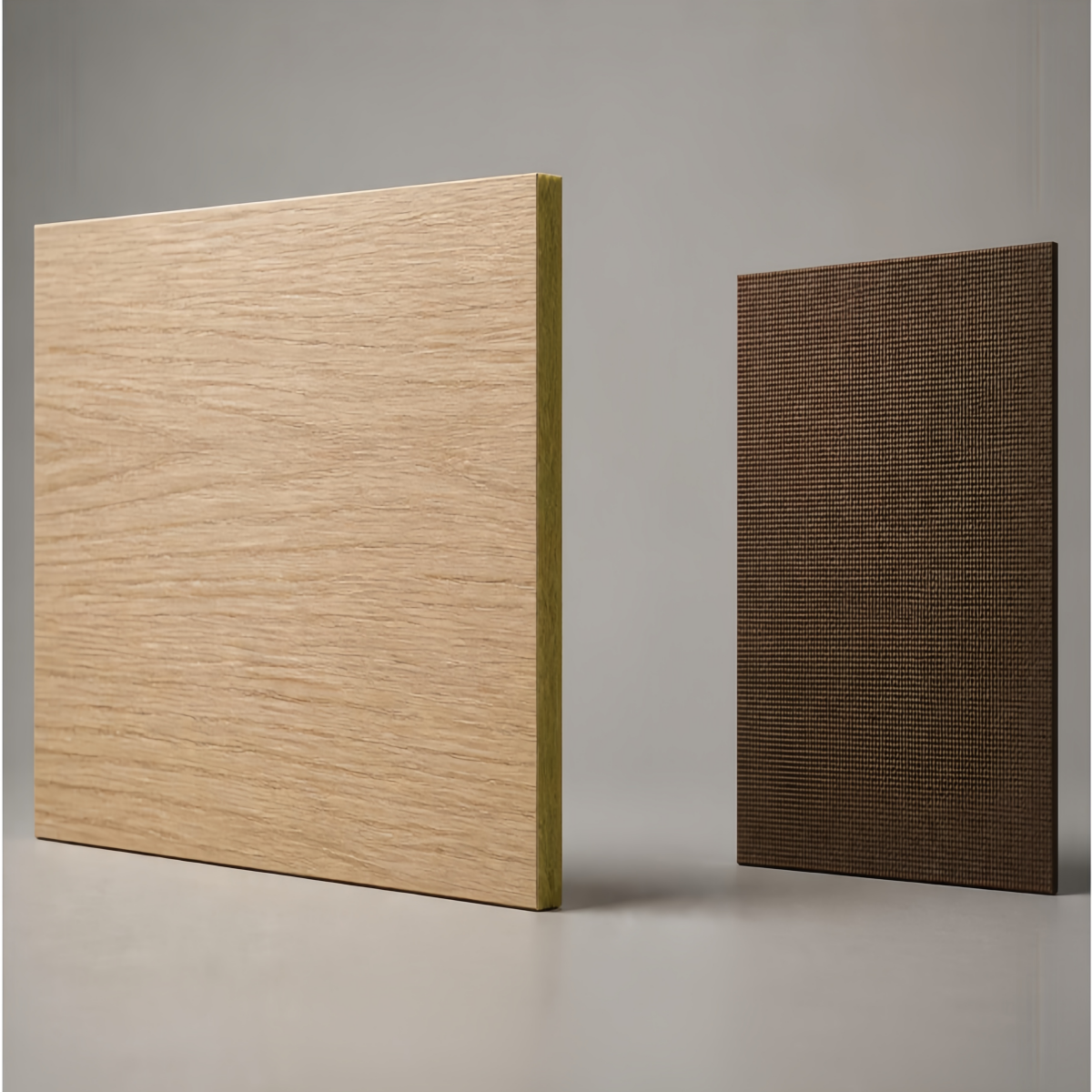
Pressed Laminate: Durable Commercial Surfaces [B1 Fire Rated]

Get a Free Quote

Our representative will contact you soon.
Email
Mobile/WhatsApp
Name
Company Name
Message
0/1000

Engineered Surface Performance Without Compromise

Pressed laminate delivers a dense, thermoset surface that resists daily wear in high-traffic commercial environments. The manufacturing process consolidates melamine-impregnated decorative layers over phenolic core sheets under controlled heat and pressure, producing a non-porous face that cleans easily and maintains appearance over extended service life. For specifiers, this means fewer replacement cycles and predictable maintenance costs across hotel corridors, retail counters, and office workstations. The material also accepts a broad range of decors, from solid colors to woodgrains, supporting design continuity without sacrificing durability. Andiwilson supplies pressed laminate sheets in standard and project-specific formats, allowing fabricators to cut, edge, and install with conventional woodworking equipment.
Get A Quote

Case Study

Hospitality Casework Withstands Guest Traffic

A boutique hotel refurbishment specified pressed laminate for bathroom vanities and corridor console tops. The surface was selected for its resistance to water spotting and cosmetics staining. After eighteen months of continuous operation, maintenance teams reported only routine cleaning with no refinishing required. The fabricator valued the consistent sheet thickness, which simplified edge-banding and reduced rework during installation. This profile reflects typical hospitality demand: a surface that looks refined at check-in but survives daily chemical exposure and abrasion without visible degradation.

Retail Fixture Surfaces Maintain Brand Presentation

A multi-site retail rollout used pressed laminate for cash wraps and display plinths across thirty locations. Uniform color and texture across production batches were essential for brand consistency. The specified grade offered a matte finish that resisted fingerprint marking, a practical benefit in customer-facing zones. Store planners noted that the laminate’s impact resistance reduced edge chipping during fixture transport and reassembly. The material was processed on standard panel saws and edge-banders, keeping fabrication within local millwork capabilities and shortening the replenishment cycle for damaged components.

Laboratory Bench Tops Meet Chemical Resistance Demands

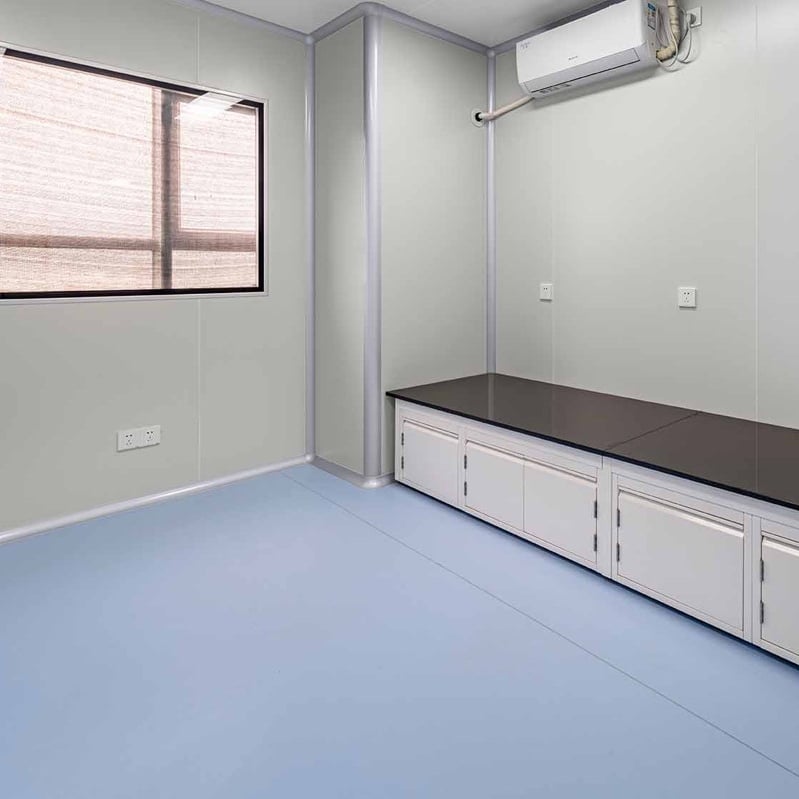
An educational laboratory project required work surfaces that tolerated dilute acids, solvents, and daily disinfection. Pressed laminate with a high-pressure thermoset face was approved for bench tops in teaching spaces. The non-porous surface prevented liquid ingress at seams when specified with sealed edges. Facilities staff appreciated that spills could be wiped without staining, and the material did not support microbial growth under normal cleaning regimes. This application demonstrates how standard pressed laminate, when correctly specified and fabricated, serves controlled environments beyond conventional furniture.

Related products

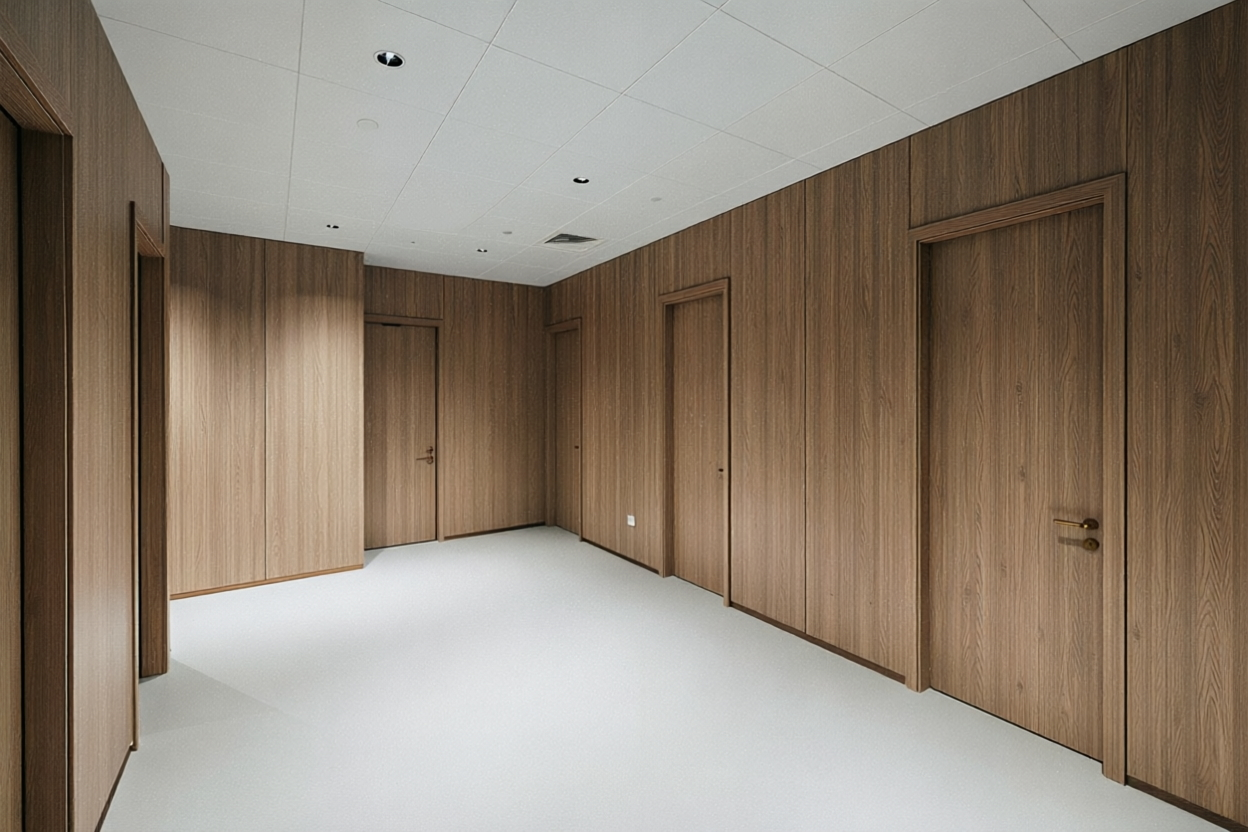
Pressed laminate is a thermosetting decorative surface manufactured by consolidating resin-impregnated papers under heat and pressure. In high-pressure laminate (HPL) production, phenolic core layers and melamine decorative layers are bonded at pressures of approximately 1,000 psi and temperatures near 149°C, yielding a dense sheet with consistent thickness and a closed, non-porous surface. Continuous pressed laminate (CPL) follows a related principle using double-belt presses, with pressure ranges of 30 to 70 bar and temperatures between 150°C and 200°C. The resulting material is classified under EN 438 for decorative high-pressure laminates, a standard that governs abrasion resistance, scratch resistance, impact performance, and resistance to heat, moisture, and staining. Andiwilson supplies pressed laminate for interior vertical and horizontal applications, including wall panels, casework, table tops, and fixture surfaces. Sheets are available in multiple thickness grades to suit flat lamination or membrane pressing, and back surfaces are sanded for reliable adhesive bonding. For project teams, the practical value lies in predictable fabrication: standard woodworking tools cut and edge the material without specialized equipment, and the consistent surface reduces finishing variability across production runs.
Frequently Asked Questions

What is the difference between HPL and CPL pressed laminate?

HPL is produced in multi-opening presses under high pressure and temperature, creating a rigid sheet with a dense core. CPL is manufactured continuously on double-belt presses, producing a thinner, more flexible laminate in roll or sheet form. Both share thermoset surfaces, but thickness range and handling differ by production method.
EN 438 covers decorative high-pressure laminates and defines test methods for abrasion, scratches, impact, heat, and stain resistance. Specifiers should request test data against the relevant part of EN 438 for the intended application grade, particularly for horizontal surfaces subject to heavy use.
Standard pressed laminate is intended for interior use. In bathrooms or food service areas, specify sealed edges and approved adhesives to limit moisture ingress at cut lines. Direct water immersion and continuous wet conditions require alternative materials or specialized grades; standard HPL is not designed for submerged service.
Decorative HPL is commonly supplied in thicknesses from approximately 0.7 mm to 1.2 mm for vertical and light horizontal applications. Thicker grades are specified where greater impact resistance is needed. CPL decorative layers typically range from 0.3 mm to 0.5 mm.
Exposed edges should be sealed with matching edge banding or approved sealant to prevent moisture absorption into the core. For horizontal surfaces, edge protection also reduces the risk of impact damage during daily use. Andiwilson recommends dry cutting with sharp tooling to minimize micro-chipping on the decorative face.

Related article

Quartz Fiber Board for Medical and Commercial Buildings: A New Generation of A-Class Fireproof Decorative Wall Panels

30

Jul

Quartz Fiber Board for Medical and Commercial Buildings: A New Generation of A-Class Fireproof Decorative Wall Panels

View More
What Are the Key Benefits of Using Exterior Wall Laminated Panels in High-Rise Buildings?

25

Sep

What Are the Key Benefits of Using Exterior Wall Laminated Panels in High-Rise Buildings?

The Code Question Comes Before the Marketing Pitch Any conversation about exterior wall laminated panels on high-rise buildings has to start with fire, not with aesthetics or installation speed. The reason is simple. A facade on a tall building is ...
View More
What Makes Compact Laminate the Ultimate Choice for High-Moisture Environments?

29

Sep

What Makes Compact Laminate the Ultimate Choice for High-Moisture Environments?

The Failure Point Is Almost Never the Face Most moisture damage in built environments does not start on the visible surface. It starts at a cut edge, a drilled hole, a seam, or a junction where one material meets another. A laminate-faced MDF board...
View More
A Complete Guide to Choosing the Right Exterior Wall Laminated Panels for Your Next Project.

23

Oct

A Complete Guide to Choosing the Right Exterior Wall Laminated Panels for Your Next Project.

Fire Classification Comes Before Aesthetics Specifying exterior wall laminated panels for a new project usually begins with a finish sample, a color, and a profile. That order is risky. A facade panel on a commercial building is part of a life safety...
View More

What Fabricators and Specifiers Say

Elena Vasquez

We specified Andiwilson pressed laminate for a clinic reception desk because we needed a surface that could handle daily disinfection without dulling. The sheets arrived with consistent color across the batch, and our millwork team had no issues cutting and edge-banding. Six months in, the counter still looks clean with just a damp cloth. The material behaves exactly as a high-pressure laminate should, and the documentation matched the delivered product.

Marcus Bell

As a small custom furniture shop, we avoid materials that demand special tooling. Andiwilson’s pressed laminate cuts on our standard panel saw and accepts our usual adhesive. We used it for a café bar top and tabletops; the surface has resisted coffee stains and accidental knife marks better than the low-pressure boards we tried before. The back sanding helped the glue bond evenly, and we did not see telegraphing through the face.

Get a Free Quote

Our representative will contact you soon.
Email
Mobile/WhatsApp
Name
Company Name
Message
0/1000
Consistent Sheet Quality Across Batches

Consistent Sheet Quality Across Batches

Pressed laminate production controls temperature and pressure to consolidate resin layers uniformly. The result is predictable thickness and color from sheet to sheet, which matters when a project spans multiple fabrication runs. Inconsistent laminate forces fabricators to sort, reorder, or adjust edge profiles, adding cost and delay. Andiwilson maintains batch traceability so specifiers can rely on the delivered material matching the approved sample for color and surface texture.
Compatible With Standard Fabrication Methods

Compatible With Standard Fabrication Methods

Pressed laminate does not require specialized CNC equipment or unusual adhesives. It cuts cleanly with carbide-tipped tooling, accepts common contact adhesives, and edge-bands with standard PVC or ABS tapes. For smaller millwork shops and on-site installers, this compatibility lowers the barrier to specification and reduces the risk of installation defects. The sanded back surface further improves bond reliability, particularly on large vertical panels where adhesive spread must be uniform across the full sheet area.
Surface Properties Suited to Commercial Cleaning

Surface Properties Suited to Commercial Cleaning

The thermoset face of pressed laminate is non-porous and does not absorb routine cleaning solutions. In hotels, clinics, and food service front-of-house areas, surfaces must tolerate frequent wiping without hazing or staining. Pressed laminate maintains its appearance under these conditions and does not require periodic sealing or refinishing. This characteristic extends the service interval between replacements and supports housekeeping protocols that prioritize speed and consistency across multiple rooms or units.
onlineONLINE