High Pressure Laminate Board Guide for Fit-Out Fabricators

Get a Free Quote

Our representative will contact you soon.
Email
Mobile/WhatsApp
Name
Company Name
Message
0/1000

Andiwilson High Pressure Laminate Boards for Fit-Out Fabrication

High pressure laminate boards give fabricators a flat, stable component that can be cut and edged before delivery. Andiwilson reviews board thickness, face balance, edge band and fixing plan with each project. An illustrative office desk package used 18 mm boards with 1 mm ABS edging and cable ports cut from approved drawings. In a retail shelving trial, 12 mm boards helped reduce weight on adjustable brackets. Boards were labelled by bay to simplify installation. Suitability depends on the chosen build-up and documented care, not on universal claims.
Get A Quote

Case Study

Office Desk Tops with Cable Ports

An illustrative office refurbishment specified 18 mm high pressure laminate boards for 24 desk tops, with 1 mm ABS edging and cable ports set out from a furniture schedule. Boards were cut and edged in the workshop, then labelled by desk cluster to reduce site sorting. The project team checked face balance and edge adhesion before packing. Desks were installed over two weekends in occupied floors. Cleaning instructions covered neutral detergent and avoiding abrasive pads. The brief addressed flatness, edge durability and future replacement of individual tops, with performance confirmed against the selected board build-up.

Retail Shelving Boards for Adjustable Bays

An illustrative retail fit-out used 12 mm high pressure laminate boards for adjustable shelving in 36 bays. The lighter board helped reduce load on existing brackets, while 0.8 mm matching edge band protected exposed front edges. Bay labels and batch packing allowed the shop team to install after closing. The visual team approved a master board under track lighting and agreed a fingerprint-wiping routine. Two spare boards were retained for merchandising changes. The specification covered flatness, edge finish and manageable replacement, with durability expectations limited to the agreed board and bracket system.

Laboratory Bench Substrate Boards with Service Cut-Outs

An illustrative laboratory upgrade used 18 mm high pressure laminate boards as bench substrates under a chemical-resistant worktop. Boards were drilled for service rods and sink supports from survey drawings, then sealed at cut edges before the top was fixed. The contractor phased delivery by room to keep two laboratories open. Technicians were given a simple inspection routine for edges and joints. One spare board was kept for future modifications. The brief focused on flatness, cut-out accuracy and service access, with performance assessed against the selected substrate and worktop combination.

Related products

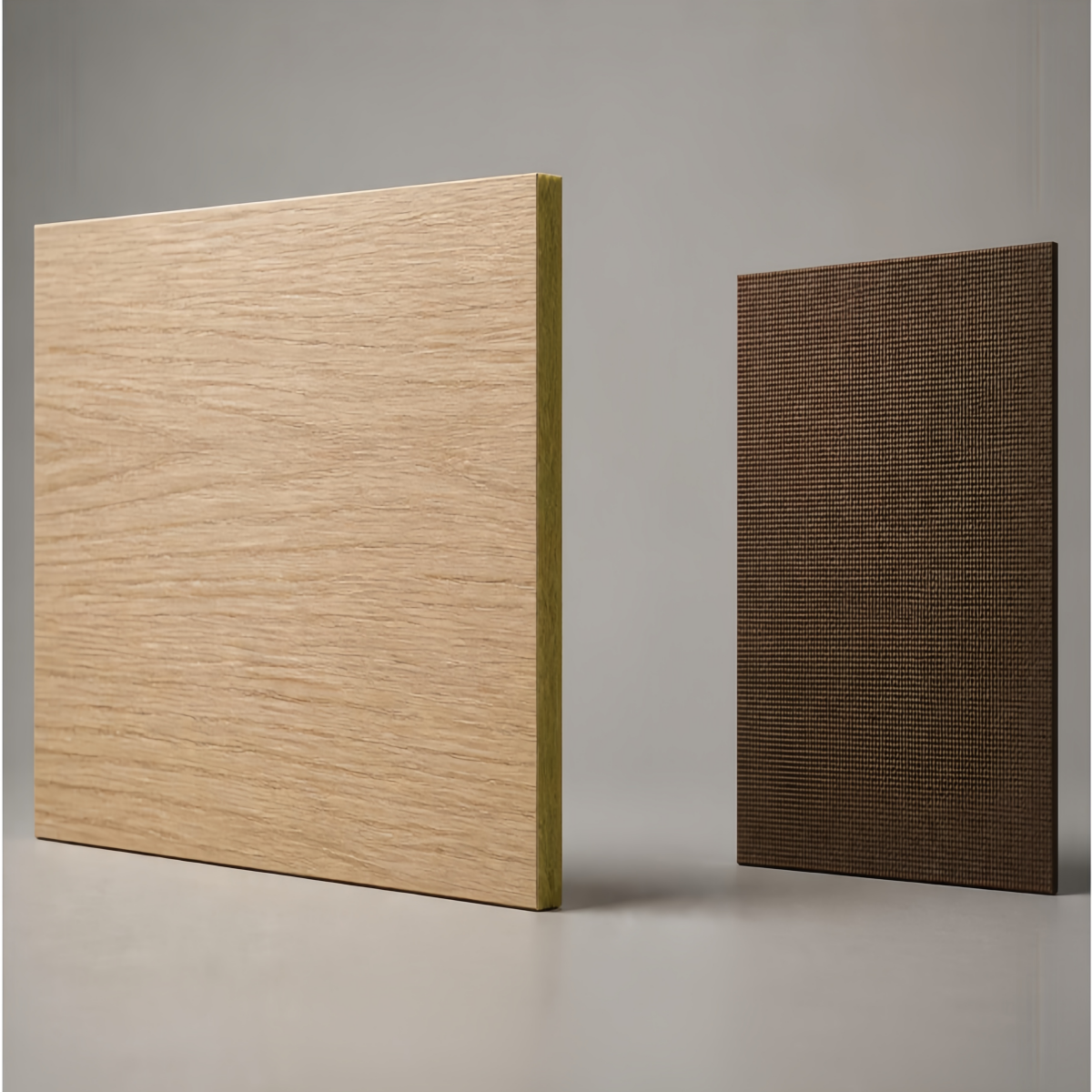
A high pressure laminate board is a finished component rather than a thin surface alone. The build-up usually combines a core board with decorative laminate faces, cut to size and edged for installation. Andiwilson works with fabricators on board thickness, face balance, edge band and fixing details before production. Standard boards are often supplied at 2440 × 1220 mm, though project sizes vary. An illustrative office package used 18 mm boards for desk tops; a retail trial used 12 mm boards for adjustable shelves. Workshop cutting and edging reduce site dust and help maintain consistent edges. Boards can be labelled by desk cluster or bay and packed in installation order. Clear packing lists also help contractors match boards to drawings during handover. Andiwilson provides care notes for neutral-detergent cleaning and edge inspection. Performance should be checked against the selected build-up and available test data, because a board's behaviour depends on core, face, edge and fixing conditions.
Frequently Asked Questions

What is a high pressure laminate board used for?

It is used as a finished component for desk tops, cabinet fronts, shelving, wall linings and bench substrates. The board combines a core with decorative faces and can be cut and edged before delivery. Andiwilson advises matching thickness, edge band and fixing method to the intended use and cleaning routine.
Common illustrative thicknesses include 12 mm and 18 mm, with selection depending on span, support, weight and edge detail. Desk tops often use 18 mm boards; adjustable shelving may use 12 mm. Andiwilson recommends confirming the build-up against project drawings and current data before ordering.
Workshop cutting is preferable because it gives cleaner edges and less dust in occupied buildings. Site trimming may be needed for small adjustments, but edges should be sealed or banded promptly. Andiwilson advises agreeing cut lists and edge profiles before production to reduce late changes and protect appearance.
Exposed edges can use matching laminate, ABS banding or aluminium trim, depending on handling and design. Front edges on shelving and desk tops usually need banding; wall boards may use trims at corners. Andiwilson recommends agreeing edge samples and fixing details before fabrication so joints align and cleaning remains practical.
Yes. Project teams can request board samples, available thickness options and guidance on cut lists before production. Andiwilson encourages checking face balance, edge band and fixing method against the application. This helps fabricators plan workshop cutting and avoid relying on general claims during tender or handover.

Related article

Prefabricated Modular Walls Take Another Leap Forward! Integrated Invisible Door Solutions Redefine the Boundaries of Spatial Aesthetics and Practicality

26

Jul

Prefabricated Modular Walls Take Another Leap Forward! Integrated Invisible Door Solutions Redefine the Boundaries of Spatial Aesthetics and Practicality

View More
Why Do Architects Prefer Custom Textured Wall Panels for Museum and Gallery Spaces?

23

Sep

Why Do Architects Prefer Custom Textured Wall Panels for Museum and Gallery Spaces?

The Acoustic Problem That Decorative Finishes Alone Cannot Solve Walk into a gallery with hard floors, high ceilings, and bare drywall, and the space tells you something immediately. Footsteps carry. Conversations from three rooms away bleed throug...
View More
How Do Exterior Wall Laminated Panels Help Reduce Carbon Footprint in Construction?

12

Oct

How Do Exterior Wall Laminated Panels Help Reduce Carbon Footprint in Construction?

The Carbon Argument Starts With How Little Aluminium Goes Into the Panel A laminated exterior panel is not a thin coat of paint over a solid metal sheet. It is a sandwich. Two thin aluminium skins sit on either side of a core that does most of the di...
View More
A Complete Guide to Choosing the Right Exterior Wall Laminated Panels for Your Next Project.

23

Oct

A Complete Guide to Choosing the Right Exterior Wall Laminated Panels for Your Next Project.

Fire Classification Comes Before Aesthetics Specifying exterior wall laminated panels for a new project usually begins with a finish sample, a color, and a profile. That order is risky. A facade panel on a commercial building is part of a life safety...
View More

Illustrative Board Specification Notes

Laura Bennett

An illustrative office fit-out note described 18 mm boards for 24 desk tops, with cable ports cut from a furniture schedule. Workshop edging and desk-cluster labels reduced site sorting during two weekend installations. The team checked face balance and edge adhesion before packing. Cleaning advice covered neutral detergent and avoiding abrasive pads. The note addressed flatness, edge durability and replacement of individual tops, with performance confirmed against the selected build-up.

Michael Torres

An illustrative retail shelving note described 12 mm boards for 36 adjustable bays. Lighter boards reduced load on existing brackets, and 0.8 mm edge band protected front edges. Bay labels and batch packing supported after-hours installation. The visual team approved a master board under track lighting and agreed a fingerprint-wiping routine. Two spare boards were kept for merchandising changes. The note covered flatness, edge finish and manageable replacement, with durability limited to the agreed board and bracket system.

Get a Free Quote

Our representative will contact you soon.
Email
Mobile/WhatsApp
Name
Company Name
Message
0/1000
Face Balance and Flatness Checks

Face Balance and Flatness Checks

Board flatness matters for desk tops, doors and shelving, where waviness shows under side light. Andiwilson discusses face balance and core condition before production, because uneven tension can affect cutting and edging. In an illustrative office package, boards were checked for flatness after conditioning and before cable ports were cut. Fabricators then edged and packed them flat. The aim is a component that sits correctly on frames and brackets. Checks should follow the agreed build-up and current product guidance rather than assumptions about every board.
Workshop Cutting and Edge Banding

Workshop Cutting and Edge Banding

Workshop cutting gives cleaner edges and keeps dust out of occupied rooms. Andiwilson encourages agreed cut lists, service hole positions and edge profiles before production. In an illustrative shelving trial, 12 mm boards were cut and banded in the workshop, then packed by bay for after-hours fitting. Front edges received 0.8 mm banding; exposed corners were protected during transport. Good edge adhesion and clean trimming support appearance and routine wiping. Fabricators should follow current tooling and adhesive guidance for the selected board.
Packing and Installation Order

Packing and Installation Order

Boards are bulky and easy to scratch, so packing order affects installation. Andiwilson discusses labelling by room, desk cluster or bay and packing in the sequence agreed with the contractor. In an illustrative laboratory upgrade, boards were delivered by room to keep two laboratories open. Protective corners and flat stacking reduced transport damage. Clear labels helped installers match boards to drawings without opening every pack. The approach supports smoother handover in occupied buildings. Packing and delivery details should be confirmed against the project programme and current lead times.
onlineONLINE